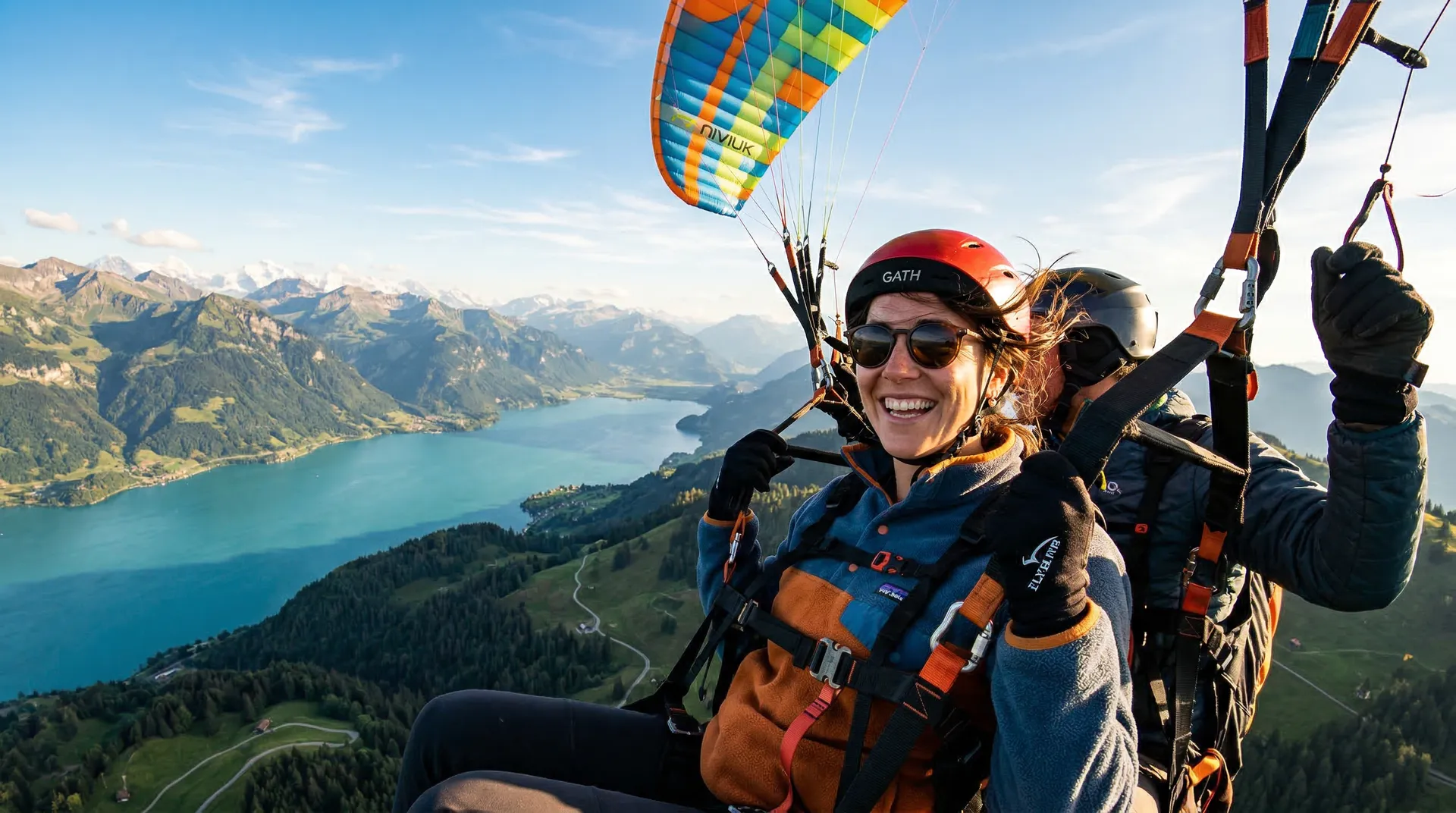
Weight is the first thing most prospective passengers ask about, and the answer is more flexible than you might expect: the vast majority of operators accept passengers from 20 kg (44 lbs) to 110 kg (242 lbs), with some going up to 120 kg (265 lbs) depending on flying conditions. As for age, children can fly from 5 years old (sometimes 3) and there is no upper limit. Across the 305 paragliding experiences we list in 15 countries, requirements vary slightly from one operator to another, but the broad picture is the same everywhere.
305 offers Paragliding
Compare offersRequirements at a Glance
| Criterion | Typical requirement | Details |
|---|---|---|
| Minimum weight | 20 to 25 kg (44-55 lbs) | Below this, the wing doesn't generate enough lift to fly normally |
| Maximum weight | 100 to 120 kg (220-265 lbs) | Depends on the wing, pilot weight and wind conditions |
| Minimum age | 5 years (sometimes 3) | Parental consent required for minors |
| Maximum age | No limit | Must be able to jog a few steps |
| Medical certificate | Not required | Unless you have cardiac history or epilepsy (operator-dependent) |
| Fitness level | Able to jog 10 m | Take-off requires a few strides on sloped ground |
This table covers the standard case for a tandem flight. Requirements for solo flying (pilot licence) are different and more demanding.
Paragliding Weight Limit: What You Need to Know
Minimum Weight
Below 20 kg (44 lbs), a tandem wing doesn't generate enough lift to behave predictably. Most schools set the threshold at 25 kg (55 lbs) to ensure a comfortable flight. In practice, that corresponds to a child of about 6 to 8 years old.
Maximum Weight
The upper limit depends on the MTOW (Maximum Take-Off Weight), which adds together the pilot's weight, the passenger's weight and equipment. A standard tandem wing supports an MTOW of 130 to 220 kg (286-485 lbs), depending on the model. In practice, most operators set the passenger limit between 90 and 110 kg (198-242 lbs). Some accept up to 120 kg (265 lbs), especially in the afternoon when thermals provide more lift.
If you weigh between 100 and 120 kg (220-265 lbs), contact the operator before booking. It's not a refusal, it's about matching the right equipment and time slot.
How Wind Affects the Weight Limit
The maximum weight isn't a fixed number. In light wind, a pilot will be more cautious with a heavier passenger (take-off requires more speed). In stronger wind, the margin is wider. That's why some operators in Interlaken or the Zillertal offer specific time slots for passengers over 100 kg (220 lbs), often mid-morning when thermal conditions are most favourable.
Age Requirements for Paragliding
Children
Most operators accept children from age 5, some from age 3. The child must be able to sit in the harness and follow the pilot's instructions during take-off. Children's flights are typically scheduled in the morning when the air is calm.
At Interlaken, one of Europe's most popular paragliding spots with 7 tour options, several schools run dedicated children's packages from age 5, with shorter flights and adapted supervision.
Seniors
There is no upper age limit. Passengers over 80 regularly fly tandem. The only requirement: being able to jog a few steps at take-off and lift your legs on landing. If you walk comfortably in everyday life, paragliding is accessible.
Health Requirements and Contraindications
Absolute Contraindications
Certain medical conditions are incompatible with a paragliding flight:
- Uncontrolled epilepsy (seizure risk at altitude)
- Serious, untreated heart conditions (altitude and mild stress raise heart rate)
- Recent surgery (back, shoulders, pelvis)
Relative Contraindications
These conditions aren't an automatic disqualification, but you should discuss them with the operator before flying:
- Chronic back problems (the harness puts pressure on the pelvis)
- Sedative or anticoagulant medication
- Severe anxiety or panic attacks (different from vertigo, which is generally not an issue in flight)
When in doubt, a medical opinion is always wise, even though no certificate is formally required.
Special Cases
Pregnancy. Most operators refuse pregnant passengers from the first trimester onwards. Take-off and landing involve minor jolts, and the harness compresses the abdomen.
Physical disability. Some operators offer adapted flights with special harnesses and assisted take-off. It's rare but it exists. Contact the operator directly to check.
Vertigo. Vertigo is a reaction to an edge or a drop. In paragliding, seated in a harness with no contact with the ground, most people who experience vertigo feel none at all. The guide to paragliding risks covers this in detail.
For pricing by destination, the paragliding cost guide compares offers from CHF 191 in Interlaken to €65 in southern Spain.
Frequently asked questions
Can you go paragliding at 100 kg (220 lbs)?
Yes, the vast majority of operators accept passengers up to 100 kg (220 lbs) with no special conditions. Between 100 and 120 kg (220-265 lbs), it's often possible but depends on the equipment and the day's weather. Contact the operator in advance to confirm.
Can you go paragliding while pregnant?
No, nearly all operators refuse pregnant passengers regardless of the stage of pregnancy. The jolts at take-off and landing, even mild ones, and the harness compression on the abdomen make flying incompatible with pregnancy.
Do you need a medical certificate for a tandem paragliding flight?
No, no medical certificate is required for a tandem flight. However, if you have a history of heart problems, epilepsy or recent surgery, let the operator know when you book. They can adapt or advise against the flight.
Can my 6-year-old go paragliding?
Yes, as long as they weigh at least 20 to 25 kg (44-55 lbs) and can sit still in the harness. Most schools offer children's flights from age 5, with signed parental consent. Flights are scheduled in the morning for calm air conditions.
See all Paragliding offers
305 offers →