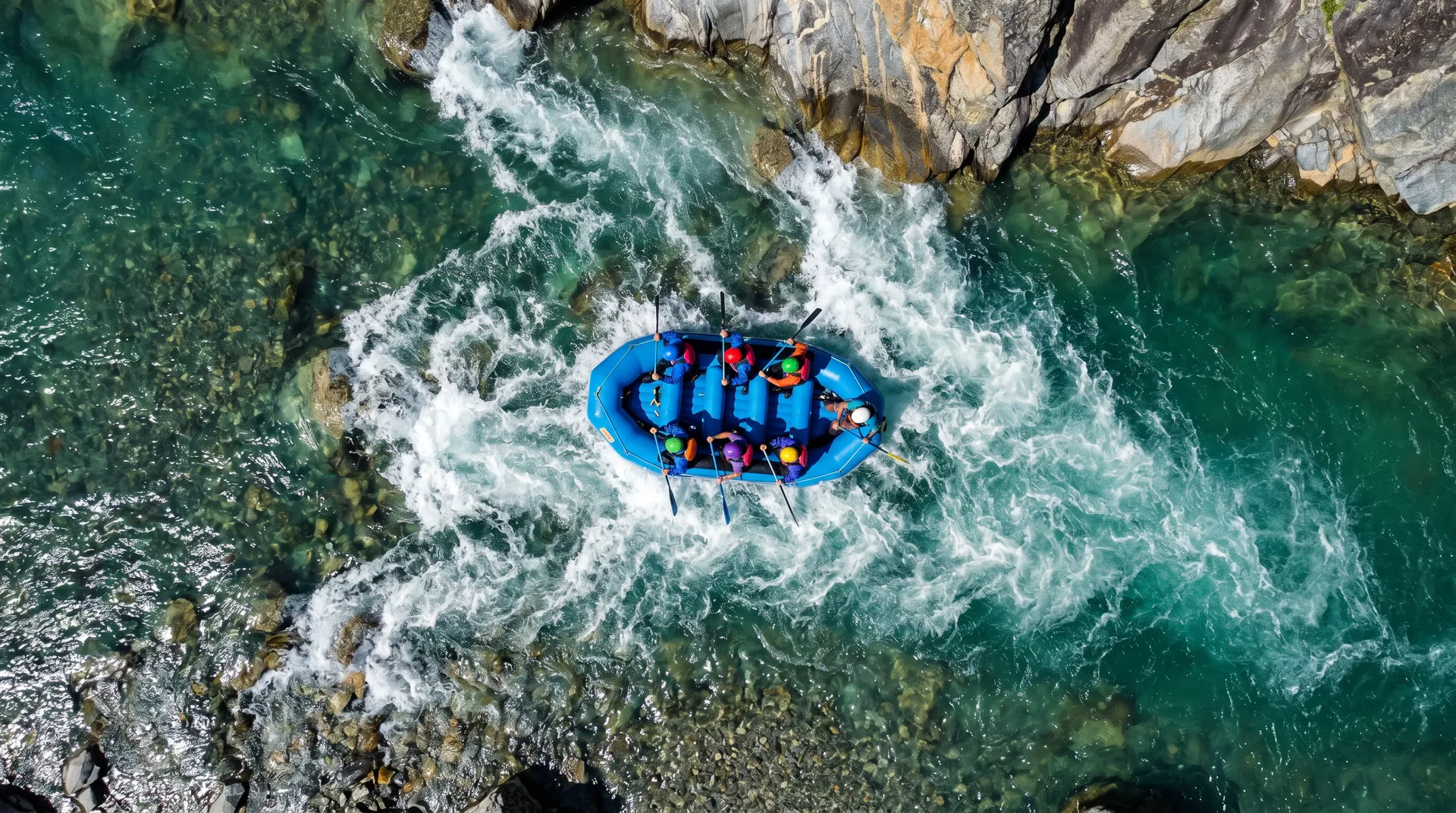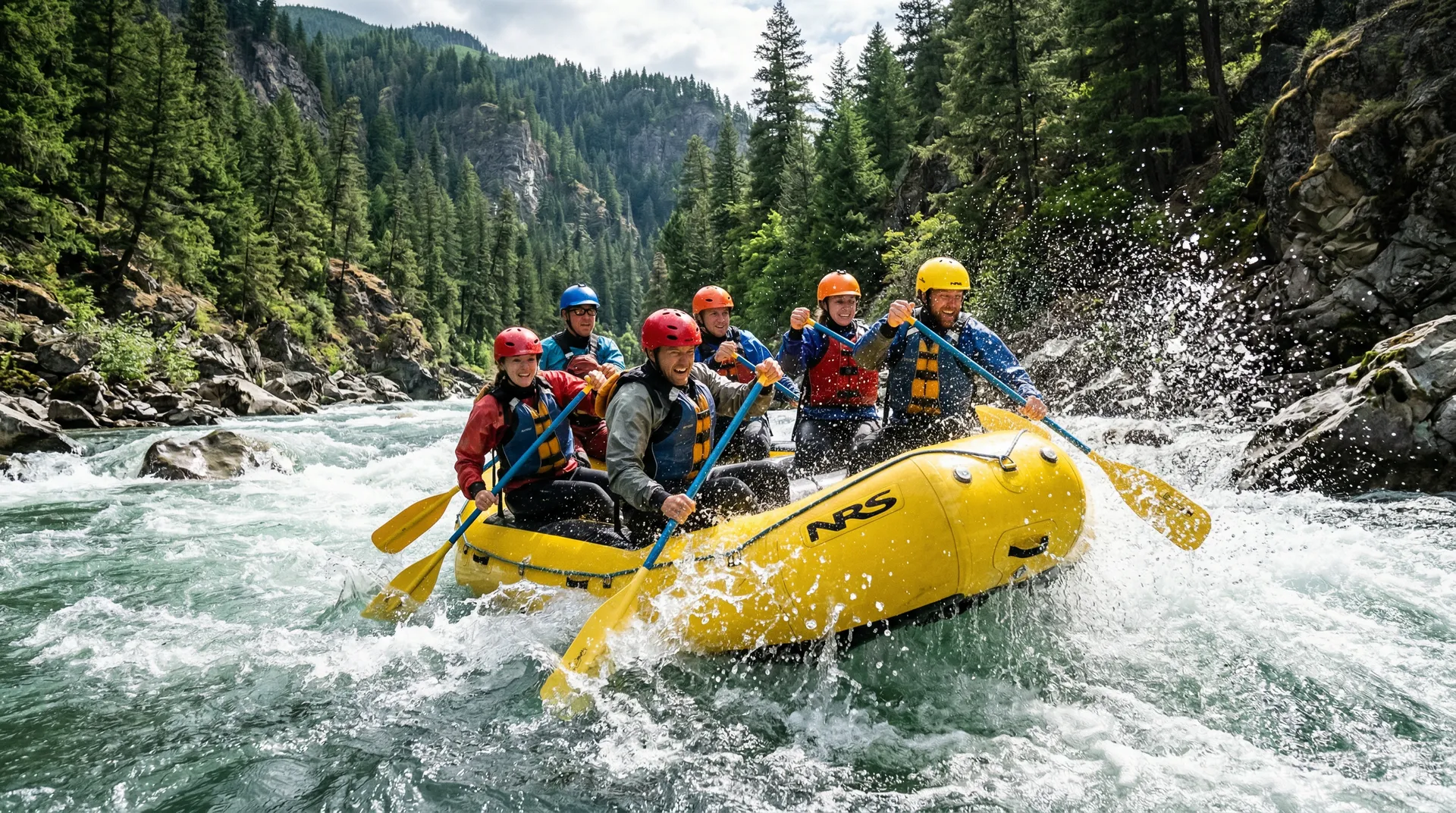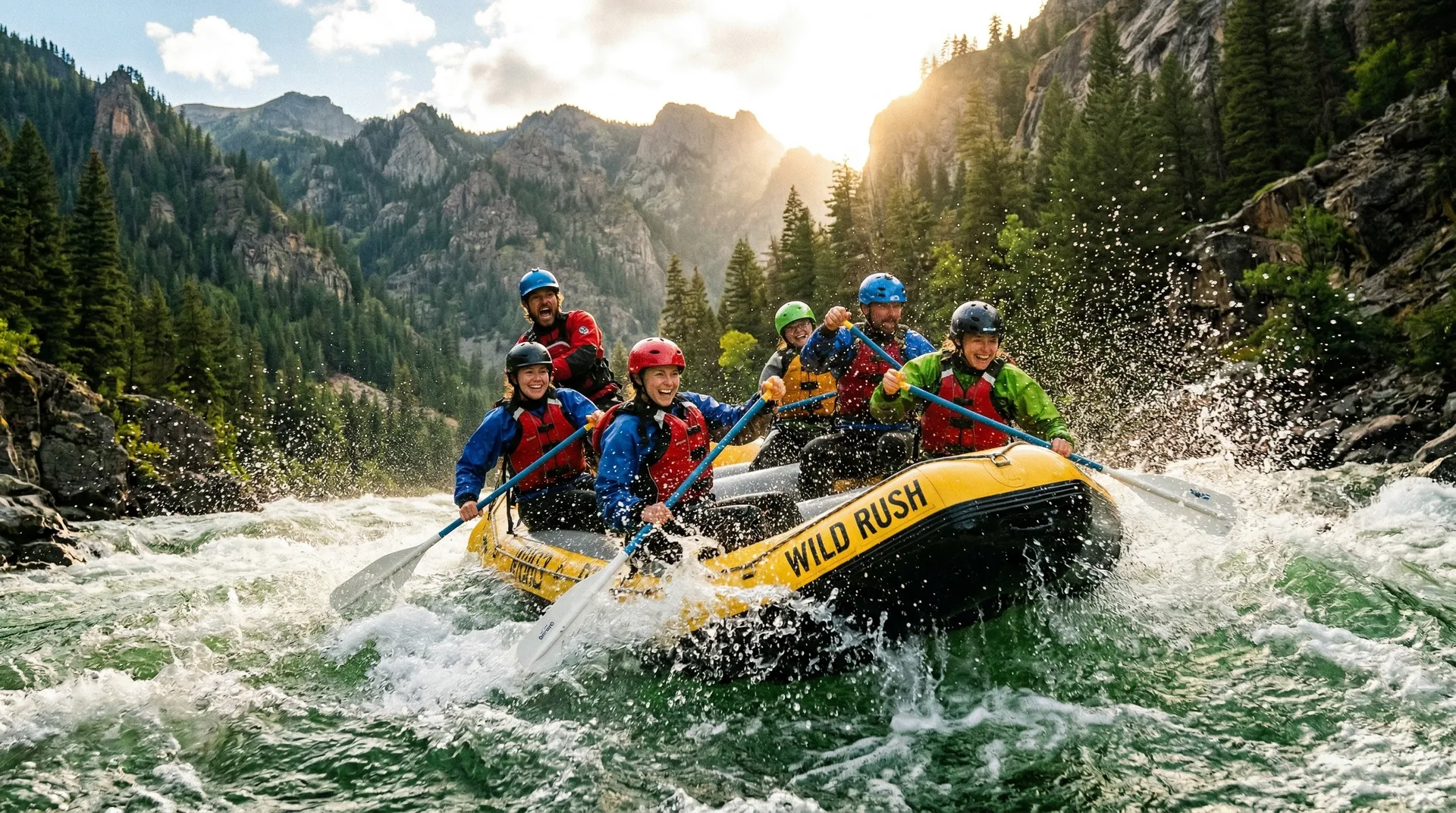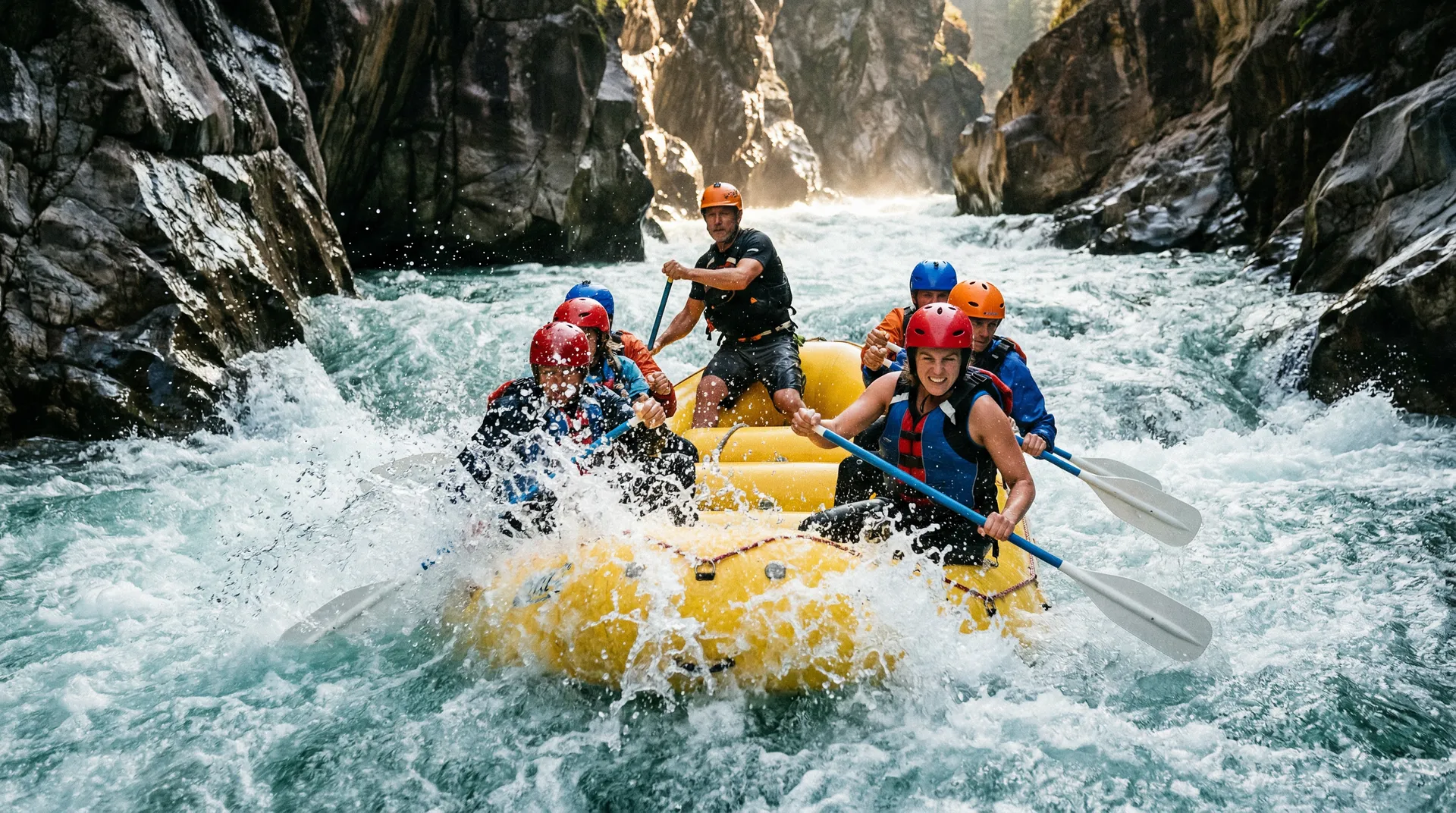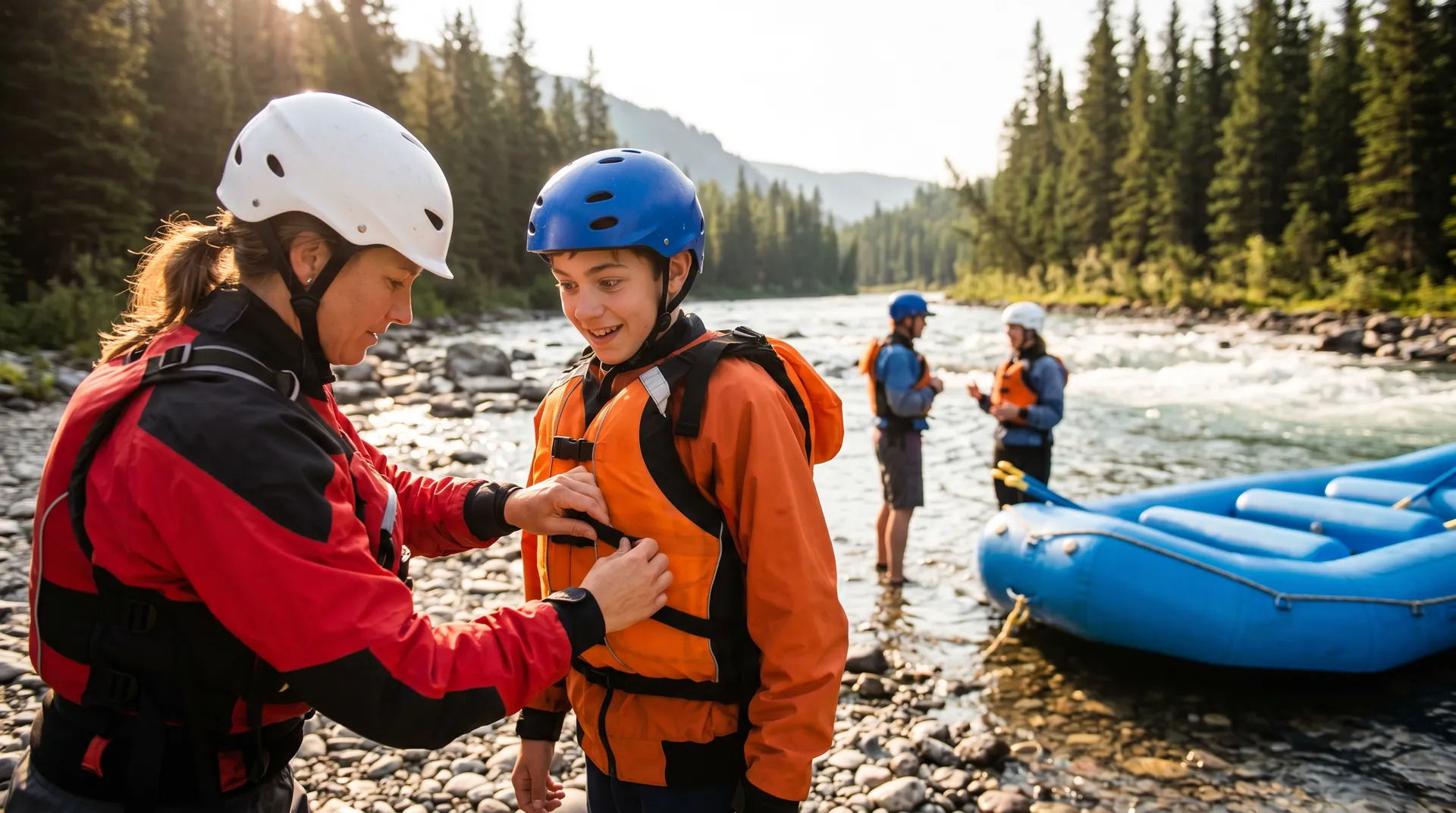
From age 6 on calm rivers, 8 to 12 on Class III rapids: the requirements for white water rafting are among the most relaxed of any water sport. The maximum weight ranges from 100 to 130 kg depending on the operator. The only real physical requirement is being able to swim 25 metres. Everything else comes down to the river class you choose.
405 offers White Water Rafting
Compare offersAge requirements for white water rafting
The minimum age depends on the river class.
On Class I and II courses (calm water, small waves), most operators accept children from age 6. This includes gentle runs like rafting in Fort William or the calmer stretches of Scottish rivers. For Class III rapids (irregular waves, strong current), the minimum rises to 8-12 depending on the operator. Class IV and above typically requires 14 to 16 years minimum.
Minors always need a signed parental consent form. Some operators require an adult in the same raft for children under 12. No upper age limit: participants aged 65 to 70 regularly run Class II and III rivers. The beginner's guide to white water rafting covers what to expect on your first run.
Weight and build for rafting
The maximum weight sits between 100 and 130 kg depending on the operator. The most common limit is 110 kg. Beyond that, it's an equipment issue: life jackets and wetsuits have a maximum size, and the number of seats in the raft may be adjusted.
No strict minimum weight in Europe. In the US, Coast Guard regulations require a minimum of 23 kg (50 lbs) for approved life jackets. In practice, any child who meets the minimum age requirement will have the necessary weight.
If you weigh over 100 kg, mention it when booking. Most operators accommodate without issue. For the budget side, the rafting cost breakdown covers pricing by country and duration.
Do you need to know how to swim for rafting?
Being able to swim 25 metres and submerge without panicking is the universal requirement across all operators. Even with a life jacket, falling into a Class III rapid means a few seconds underwater.
On Class I rivers (calm water, no rapids), some operators relax this rule. But that's the exception. When in doubt, treat the 25 m as non-negotiable.
Health conditions and contraindications for rafting
Four situations are incompatible with rafting:
- Pregnancy: systematic refusal by all operators, regardless of stage
- Serious heart conditions: risk from exertion, cold water (8 to 14 °C depending on river and season) and physiological stress
- Uncontrolled epilepsy: seizure risk in an aquatic environment
- Severely reduced mobility: you need to hold yourself in the raft, paddle and climb back in if you fall out
Controlled asthma, type 1 or type 2 diabetes and mild back problems are not contraindications, but must be disclosed before departure. The operator adjusts the route or your position in the raft.
A medical certificate is rarely required in Europe for recreational rafting. Some operators request one for Class IV and V runs.
River classes: which rafting level suits your profile?
The international river classification runs from I to VI. It determines the actual access conditions.
| Class | Water | Recommended profile | Indicative min. age |
|---|---|---|---|
| I | Calm, light current | Families, children from 6 | 6 |
| II | Regular waves, simple obstacles | Beginners, no experience needed | 6-8 |
| III | Irregular rapids, strong current | Good fitness, guided run recommended | 8-12 |
| IV | Powerful rapids, technical manoeuvres | Experienced paddlers or expert guide | 14-16 |
| V | Extreme rapids, full commitment | Experts only | 16-18 |
| VI | Unrunnable | Not available commercially | n/a |
In practice, commercial runs focus on Class II and III. That's where you'll find the accessible courses, like rafting in the Gorges du Verdon (€45 to €90) or rafting in Interlaken (€121 to €154). For a first run, a Class II or III trip with a guide is more than enough.
Frequently asked questions
What is the minimum age for white water rafting?
From age 6 on Class I and II rivers (calm water). For Class III rapids, most operators set the minimum between 8 and 12. Class IV and above is reserved for ages 14-16 and up.
Can you go rafting while pregnant?
No. All operators refuse pregnant participants, regardless of the stage of pregnancy. The impacts, cold water and physical effort are incompatible with pregnancy.
Do you need a medical certificate for rafting?
Generally, no. Recreational rafting (Classes I to III) does not require a medical certificate in Europe. Some operators request one for Class IV and V descents. If you have a medical condition (asthma, diabetes, back issues), disclose it when booking.
What is the maximum weight for rafting?
The limit ranges from 100 to 130 kg depending on the operator, with 110 kg being the most common threshold. The constraint comes from safety equipment (life jacket, wetsuit). If you weigh over 100 kg, let the operator know when booking so they can adjust the gear.
Our best spots
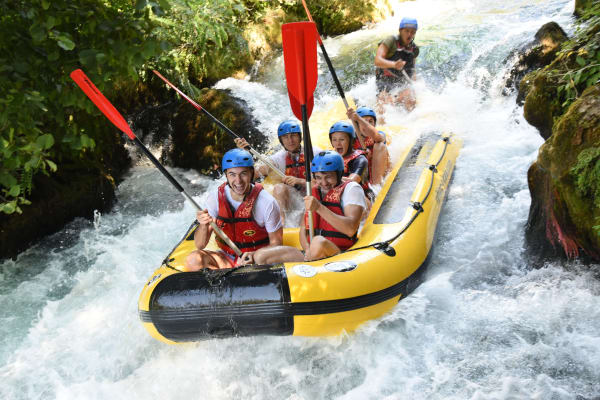
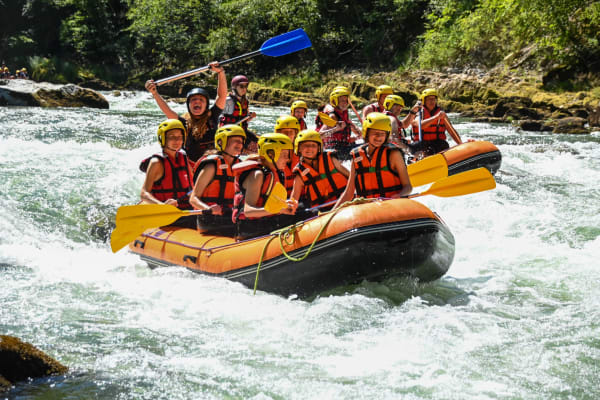
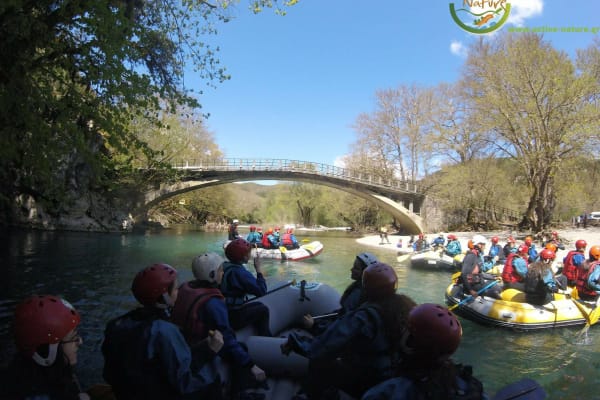
See all White Water Rafting offers
405 offers →