Canyoning · Tahiti
How to choose
Both tours are run by Natura Exploration, both run a full day, and both depart from Parc Aorai Tini Hau in Pirae. Both cost 117 €. What separates them is intensity. The Vaipurau Canyon in the Papenoo Valley is rated “Occasionally sporty”, making it the right entry point if you've never done canyoning. The lavatubes excursion steps it up to “Sporty”: navigating volcanic tube formations demands more sustained effort and comfort in tight, dark passages. Pick Vaipurau for a first descent, go lavatubes if you want the harder read on Tahiti's geology and a genuine physical push.
Compare · 2 offers


Our picks
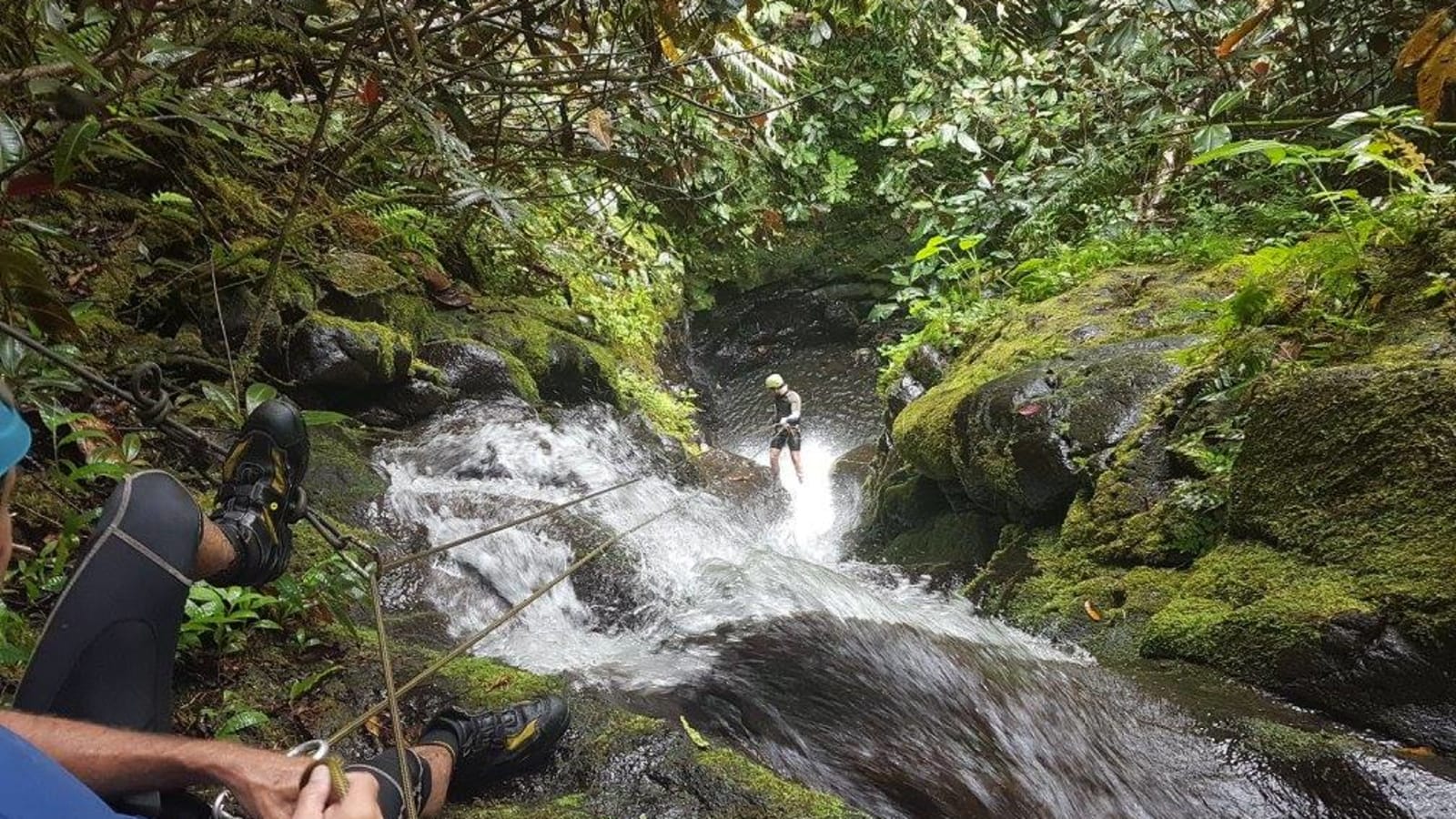
Vaipurau Canyon in the Papenoo Valley, Tahiti
The Vaipurau Canyon is rated “Occasionally sporty” and priced at 117 €, making it the lowest-barrier full-day entry into Tahiti's canyons.
Canyoning Excursion in the Lavatubes of Tahiti
The lavatube excursion is the only “Sporty”-rated option in this lineup, adding dark volcanic passages to the full-day challenge for 117 €.
Frequently asked questions
What makes canyoning in Tahiti different from canyoning in the Alps?
Tahiti's canyons run through volcanic basalt and ancient lavatubes rather than limestone. The rock texture, the warm tropical water and the dense jungle setting create a completely different physical environment from European canyon destinations.
How intense is the lavatube excursion compared to the Vaipurau Canyon?
The lavatube tour is rated “Sporty”, one level above the Vaipurau Canyon's “Occasionally sporty” rating. Expect tighter passages, more sustained effort and sections where you're moving through dark volcanic tunnels rather than open canyon walls.
What's the most intense moment on the Vaipurau Canyon route?
The Vaipurau Canyon in the Papenoo Valley is known for waterfall rappels and natural slide sections into pools. The guide from Natura Exploration will brief you on each drop before you commit to it.
Do I need canyoning experience to book either tour?
No prior experience is required for the Vaipurau Canyon, which is rated “Occasionally sporty”. The lavatube excursion is rated “Sporty” and suits people who are physically active and comfortable in confined spaces.
When is the best time to go canyoning in Tahiti?
The season runs from May through September. This dry season window means lower water levels, more manageable currents and better visibility inside the canyons and lavatubes.
Best time to go
| Month | Temperature | Rainfall | Conditions |
|---|---|---|---|
| January | 25.5 °C | 371.9 mm | Possible |
| February | 26 °C | 268 mm | Possible |
| March | 26.1 °C | 252 mm | Possible |
| April | 26.1 °C | 153.6 mm | Good |
| May | 25.5 °C | 140.8 mm | Good |
| June | 24.7 °C | 103.5 mm | Good |
| July | 24.2 °C | 99.8 mm | Peak |
| August | 23.9 °C | 60.9 mm | Peak |
| September | 24.1 °C | 64.6 mm | Peak |
| October | 24.5 °C | 114.8 mm | Good |
| November | 25.1 °C | 157.2 mm | Good |
| December | 25.4 °C | 327.3 mm | Possible |
Practical info
Equipment
Both tours run a full day at “Sporty” or near-sporty intensity, so wear water shoes with a solid grip and bring a change of dry clothes for the ride back. Natura Exploration typically provides wetsuits and helmets, but confirm at booking since tropical water temperatures in Tahiti vary by canyon section.
Getting there
Both tours meet at Parc Aorai Tini Hau on Avenue du Général de Gaulle in Pirae, roughly 5 km east of Papeete city centre and accessible by car or taxi from Faa'a International Airport.
See also
Canyoning elsewhere
Other activities in Tahiti
Updated September 2026