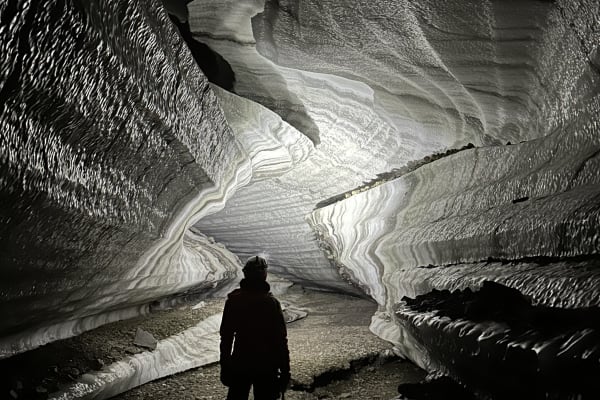
Caving in Svalbard
2 €177–€315
At depths exceeding 500 meters below the Arctic tundra, caving in Norway pushes underground exploration to its most extreme latitudes on earth. Norway's karst geology, shaped by millennia of glacial erosion, carves out cave systems of raw, uncompromising scale. This is not gentle speleology for casual visitors. The darkness here is absolute, the rock is cold and wet, and the rewards are proportional.
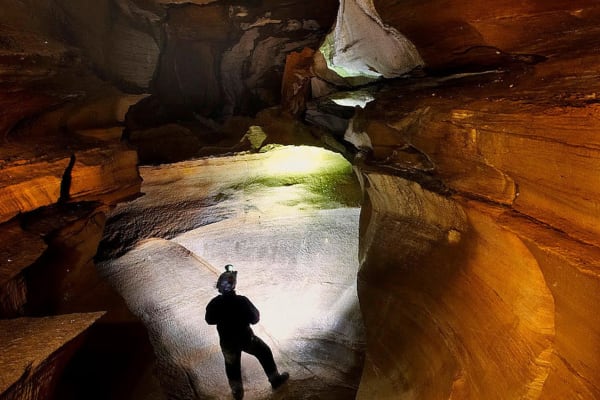
The Svalbard archipelago sits at the top of the map and offers a uniquely polar cave experience, where ice caves form alongside limestone caverns inside the Svalbard Global Seed Vault massif. Further south, the Rana region near Mo i Rana hosts the famous Grønligrotta and Setergrotta cave networks, two of Norway's longest charted cave systems with river passages and massive speleothem formations. In the northwest, the Nordland county reveals marble-rich cave corridors formed by ancient seabed uplift, accessible from Mosjøen for introductory-level descents.
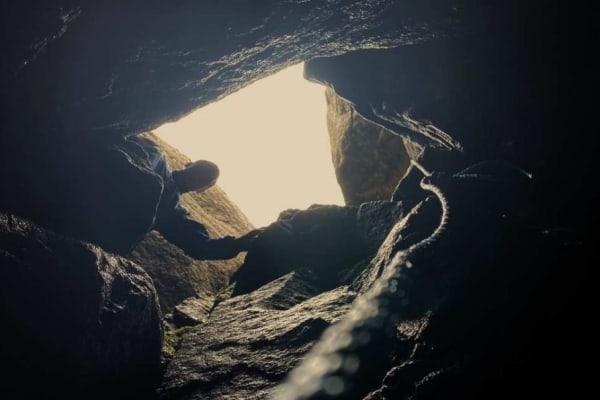
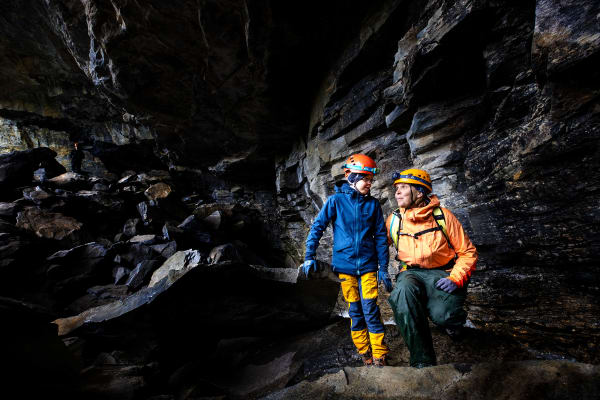
May through August is the optimal window for caving in Norway. Surface access to cave entrances in regions like Nordland and Svalbard is easiest when snow cover retreats. Cave interiors maintain a constant 4 to 6°C regardless of season, but summer months eliminate the risk of icy approach trails and allow guides to operate full multi-hour programs safely.
Caving in Norway starts at 64 € per person in Mosjøen, which covers an introductory guided descent including all equipment. In Narvik, tours are priced at 88 €. The most comprehensive Arctic caving expeditions in Svalbard start from 177 € and reach 315 €, reflecting the logistical complexity and specialized polar cave guiding required at that latitude.
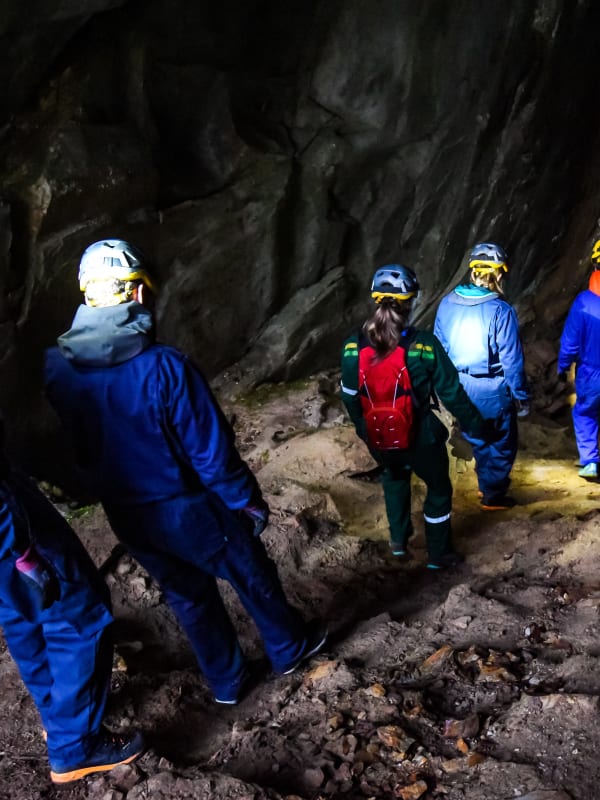
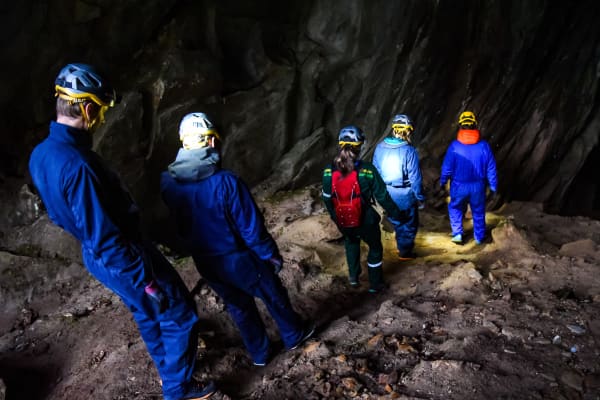
Introductory caving in Norway requires moderate fitness. Guides at sites near Mosjøen and Narvik design routes for beginners, involving crawling through narrow passages, wading in shallow streams and climbing boulder obstacles. No prior underground experience is needed. Svalbard cave expeditions demand a higher baseline: sustained cold tolerance, confident movement on uneven terrain and comfort with confined spaces.
Operators running caving in Norway supply a helmet with a mounted headlamp, a harness for rappel sections, kneepads and a neoprene wetsuit to handle the 4 to 6°C water temperatures inside active cave systems. Sturdy, closed-toe shoes are the only item participants must bring themselves. In Svalbard, outfitters include additional thermal layers suited to Arctic conditions.
The Rana region in Nordland county holds Norway's densest concentration of mapped cave passages, including the Grønligrotta and Setergrotta networks near Mo i Rana, together spanning several kilometers of charted galleries. Svalbard offers the most dramatic Arctic caving experience, with tours starting at 177 €. Mosjøen, also in Nordland, provides the most accessible and affordable entry point at 64 €.
Updated September 2026