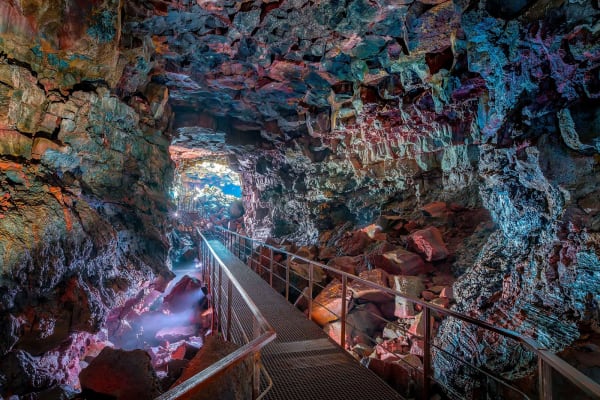
Caving in Reykjavik
7 €61–€589 5.0 (7)
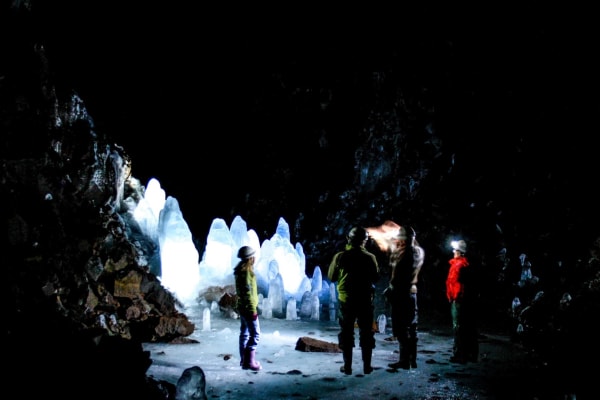
Lava tubes stretching over 100 metres below the surface make caving in Iceland one of the most geologically raw underground experiences on Earth. Iceland's volcanic geology creates cave systems that are still actively shaped by eruptions, meaning the terrain you descend into today looks nothing like a typical limestone cavern. The country sits on the Mid-Atlantic Ridge, and that tectonic pressure writes itself directly into every passage you explore.
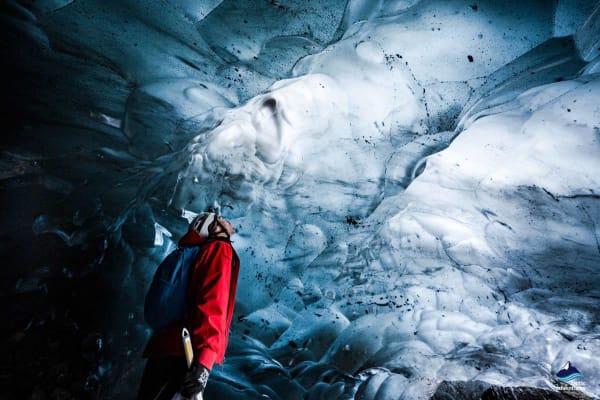
Vatnajökull National Park hosts some of the most dramatic cave access in Iceland, where ice caves carved beneath the glacier reach temperatures well below 0°C and demand crampons alongside a helmet and headlamp. Snæfellsnes Peninsula offers lava tube caving in a different register entirely, with the Víðgelmir cave running nearly 1,600 metres and featuring lava stalactites, frozen waterfalls and colour-banded basalt walls. Further south, the Mýrdalsjökull glacier conceals subglacial tunnels that open seasonally near Vik i Myrdal, adding a high-altitude dimension to the activity. Each of these zones delivers a distinct underground environment that requires a separate guided approach.
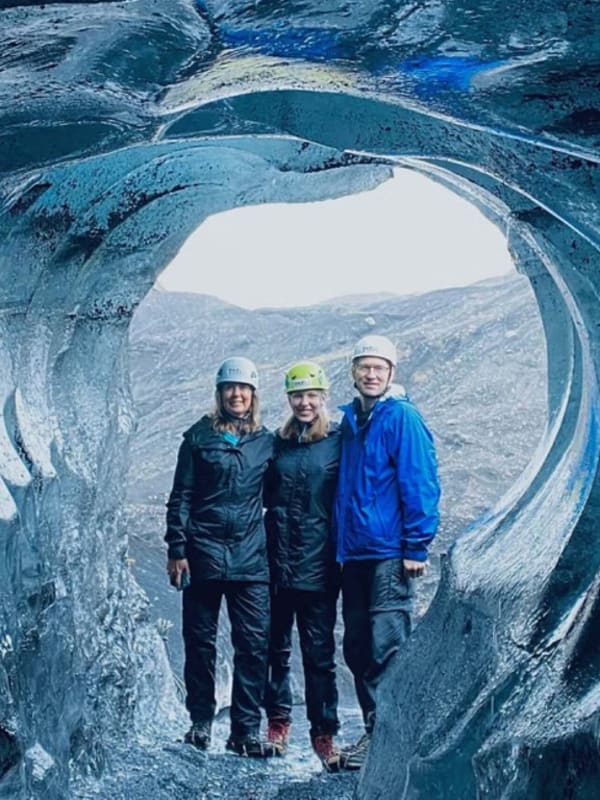
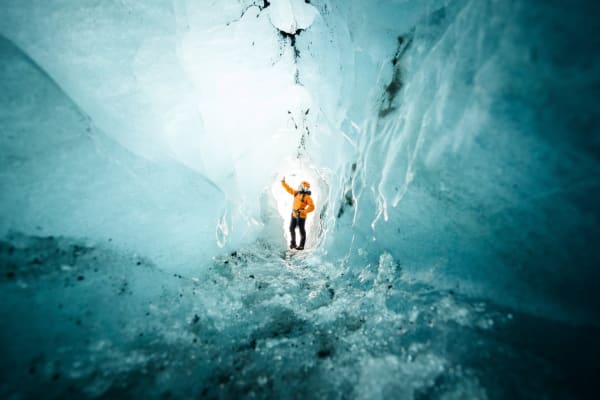
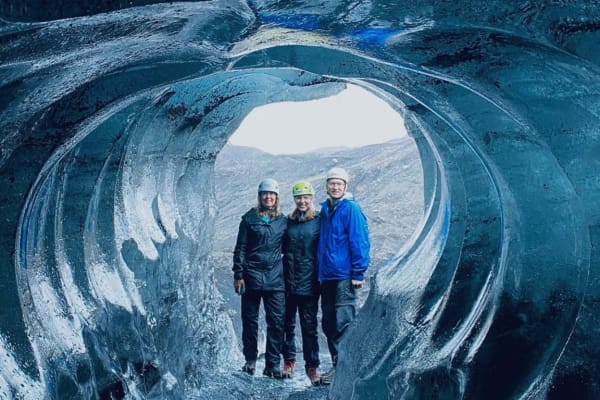
Caving in Iceland starts at 59 € per person for introductory lava tube tours departing from Reykjavik. Ice cave and glacier caving sessions, typically based near Jökulsárlón Glacier Lagoon, run between 150 € and 181 €. Tours near Vik i Myrdal average around 209 €. Price differences reflect cave type, group size and the technical equipment provided by the operator.
Caving in Iceland runs year-round, since lava tubes maintain a stable temperature of around 4°C regardless of season. July offers the easiest surface access conditions and longest daylight windows. Ice cave tours near Vatnajökull are most stable between November and March, when freezing temperatures keep glacier formations intact. Summer visitors should focus on lava tube options such as those around Reykjavik.
No prior caving experience is required for introductory speleology tours in Iceland. Operators based in Reykjavik offer beginner-friendly lava tube descents rated accessible from age 10 upward. Glacier cave tours near Jökulsárlón Glacier Lagoon require a moderate fitness level and comfort with crampons. Vertical shaft sections in more technical itineraries use a harness and belay system handled by the guide.
Most caving tours in Iceland supply a hardshell helmet, a hands-free headlamp and thermal oversuit or neoprene layers as part of the booking price. Operators near Vik i Myrdal include crampons for mixed ice-lava terrain. Guides recommend bringing your own merino wool base layer, as cave air temperature stays near 4°C. Harness and belay gear is provided for any vertical passage sections.
Jökulsárlón Glacier Lagoon holds the highest verified rating for caving in Iceland, scoring 5.0/5 across 13 reviews. Tours from this departure point combine glacier surface access with underground ice cave exploration inside Vatnajökull. Vik i Myrdal also scores 5.0/5 across 10 reviews, making it a strong alternative for subglacial tunnel itineraries in southern Iceland.
Updated September 2026