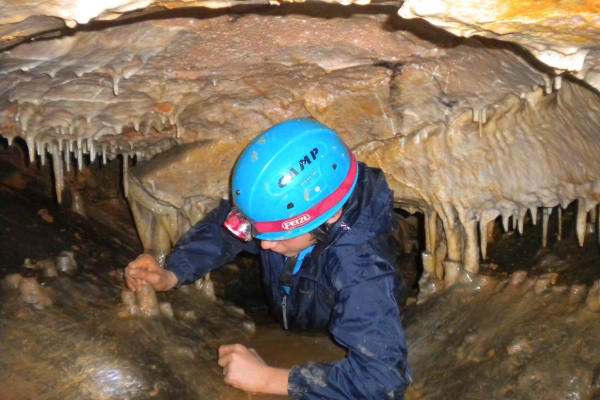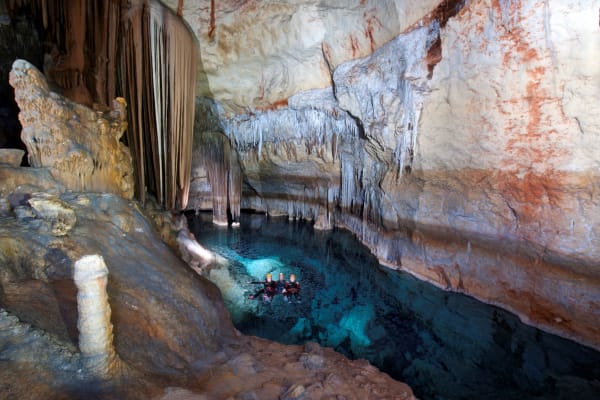
Caving in Porto Cristo, Mallorca
5 €70–€89 5.0 (119)
Spain holds more caves deeper than 1,000 meters than any other country on earth, making caving in Spain a benchmark discipline for underground explorers worldwide. The Iberian karst is not a beginner's backyard: vertical shafts exceeding 100 meters, active river passages and tight squeezes define the standard here. That density of extreme terrain is what separates a Spanish speleology trip from anything you'll find in most of Europe.
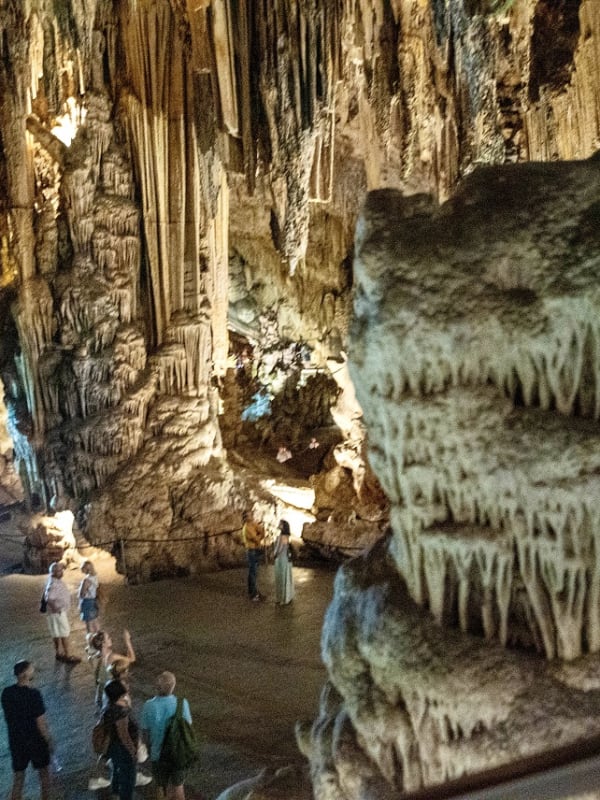
The Sistema del Trave in Asturias reaches beyond 1,400 meters deep and draws technical cavers tackling multi-pitch rappels through flooded galleries. Further south, the Cueva de Nerja in Málaga province opens into chambers so vast they host classical concerts, with Paleolithic paintings confirmed at over 40,000 years old. In the Valencia region, the Hoces del Cabriel Natural Park shelters active river caves like the Sumidero de Vallada, where water caving through submerged tunnels runs roughly 3h. The Canelobre Caves near Alicante offer a completely different texture: a single cathedral-shaped cavity 70 meters tall carved inside the Sierra de Cabeçó d'Or.
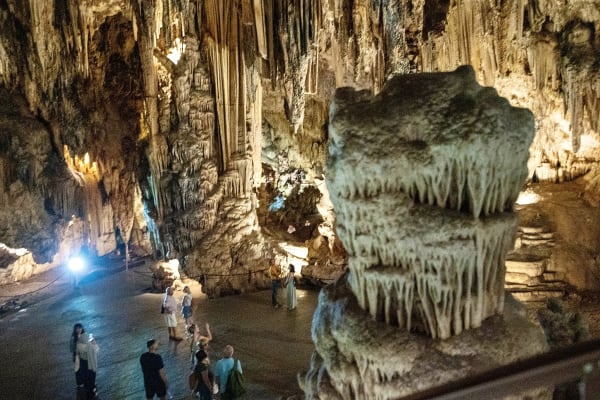
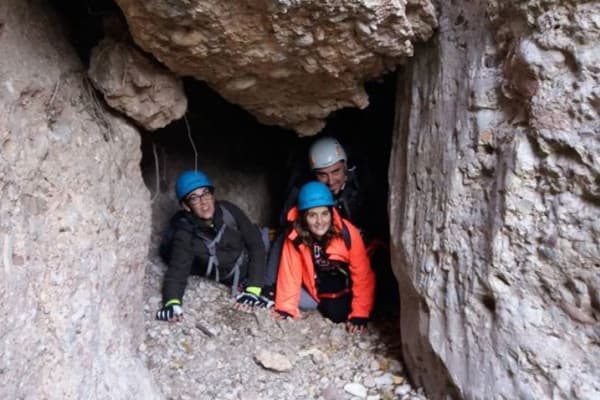
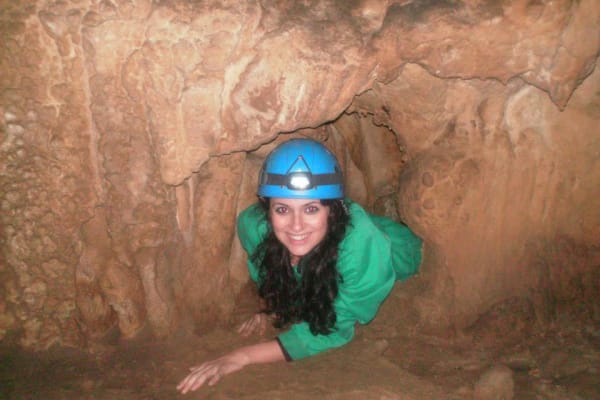
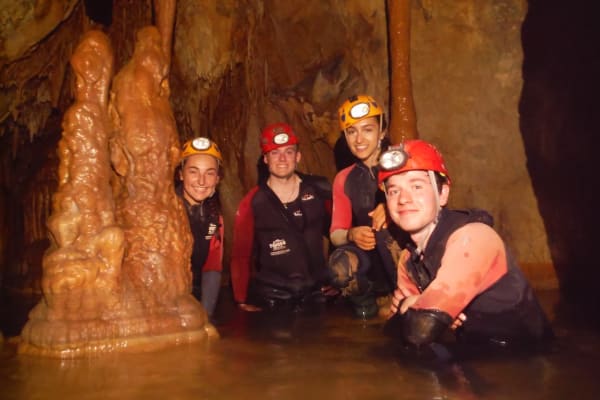
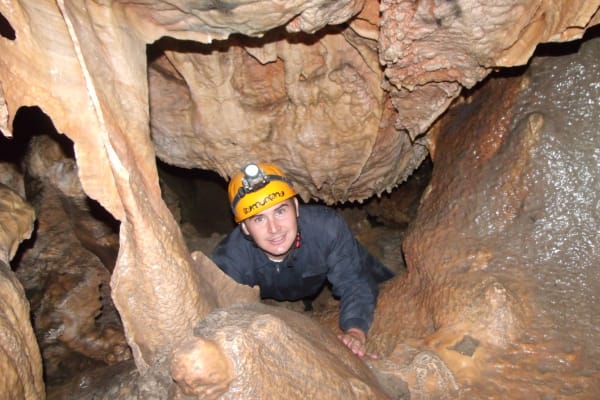
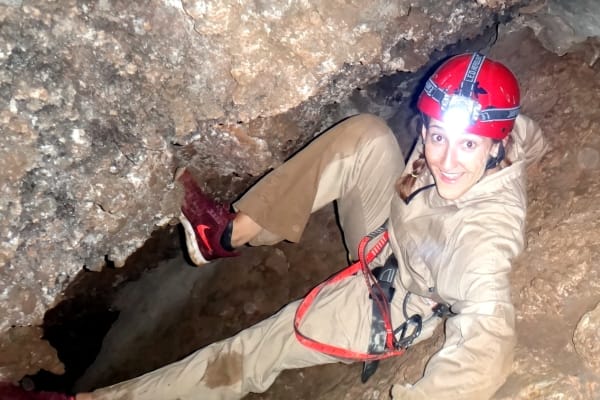
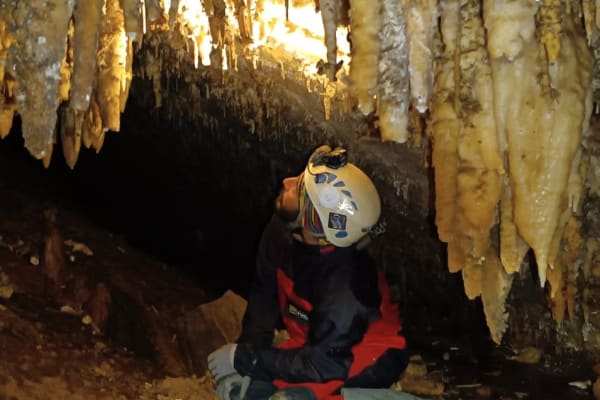
Caving in Spain is accessible year-round because underground temperatures remain stable regardless of surface weather. River caves in Valencia and Andalusia are most comfortable between April and October when air temperatures outside stay above 20°C, making the 14°C to 18°C water passages feel less sharp. November and December are the least popular months due to higher flood risk in active river systems.
Caving in Spain starts from 10 € for a guided visit in La Palma, making it one of the most accessible entry points in the country. Guided speleology sessions in Porto Cristo, Mallorca range from 70 € to 89 €, which includes full equipment: helmet, headlamp and harness. Initiation sessions in Igualada start at 50 €. Group size and cave difficulty are the main price drivers.
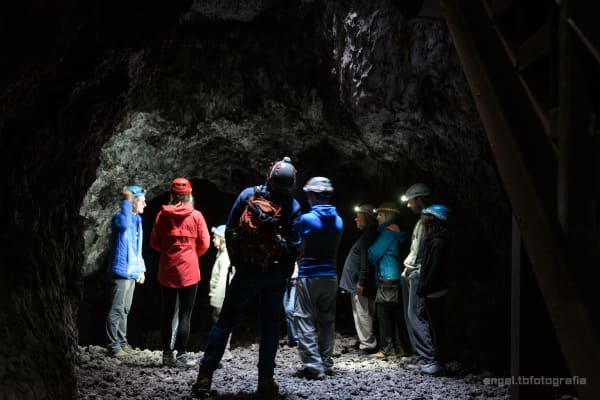
No prior experience is required for beginner caving in Spain. Initiation routes in locations like Alicante and Mallorca are designed for first-timers and last between 2h30 and 3h. Guides certified by the Federación Española de Espeleología handle all technical rigging. More demanding speleology circuits in Asturias or the Catalan pre-Pyrenees require basic rope skills and comfort in narrow passages.
The most referenced sites for caving in Spain include the Cueva de Nerja in Málaga province (Paleolithic paintings, vast chambers), the Canelobre Caves near Alicante (a 70-meter-high natural vault) and the cave systems of the Hoces del Cabriel Natural Park in Valencia for river caving. Porto Cristo in Mallorca concentrates the highest-rated guided experiences, scoring 5.0/5 across 119 verified reviews.
For guided caving in Spain, operators typically supply a helmet, a headlamp and a harness for routes involving rappel descents. A neoprene wetsuit is provided on water cave routes where temperatures run between 14°C and 18°C. You should wear closed-toe shoes with ankle support. Operators in Porto Cristo, Mallorca and Alicante confirm full equipment rental is included in the listed price.
Updated September 2026