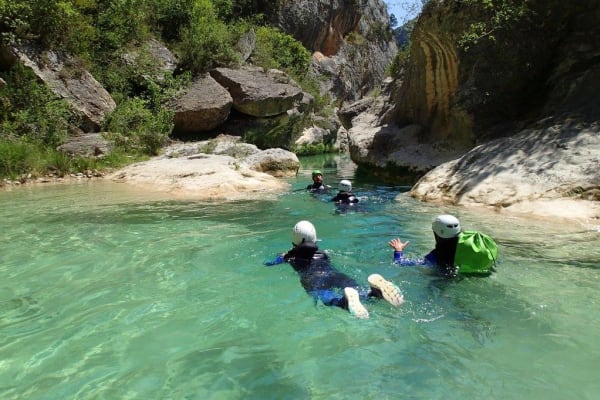
Canyoning in Sierra de Guara
12 €48–€480 5.0 (43)
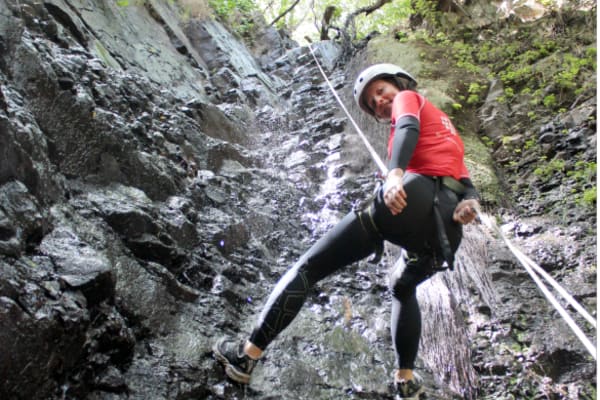
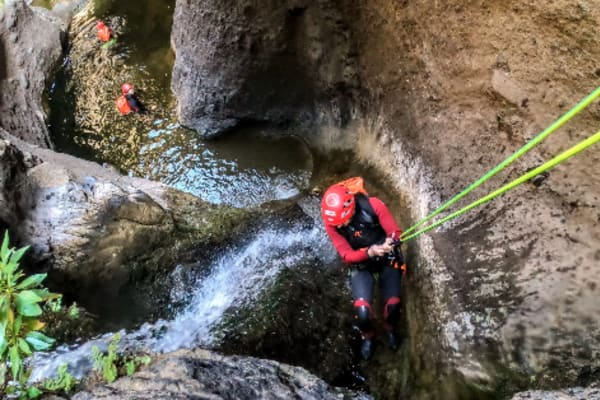
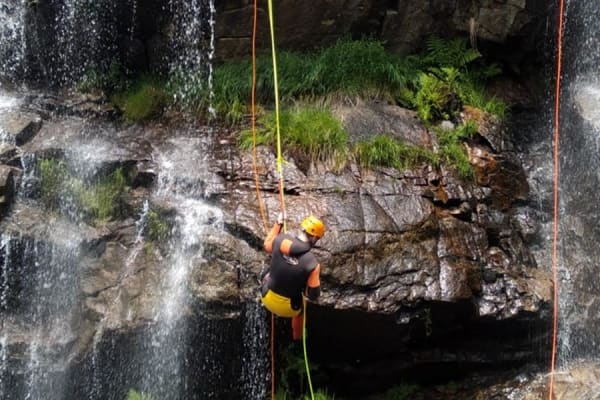
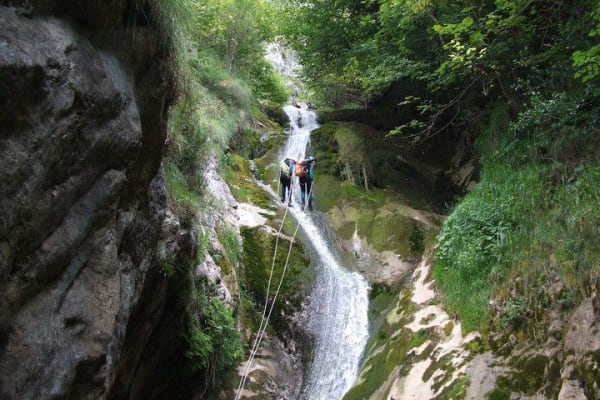
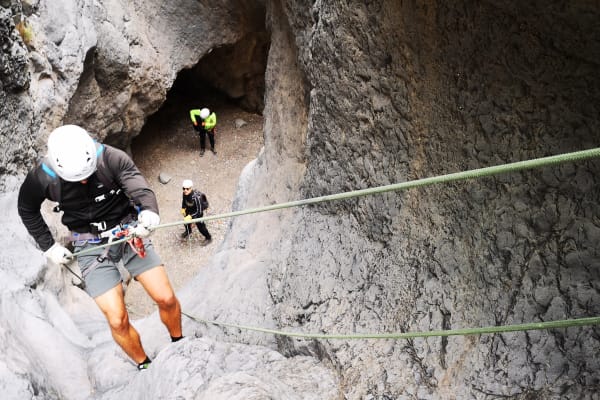
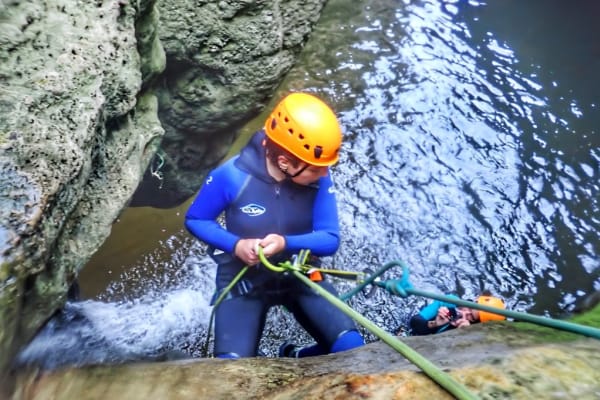
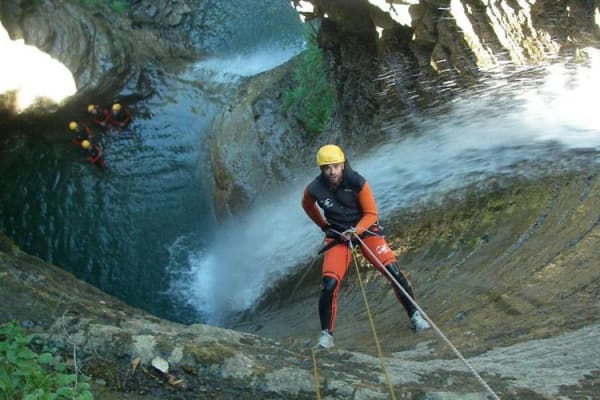
Water temperatures in the Sierra de Guara canyons drop to 12°C even in summer, and canyoning in Spain delivers that cold-water shock from the first abseil down. Spain's fractured limestone plateaus and glacially carved gorges produce some of Europe's most technically demanding descents, with rappels exceeding 40 metres on single pitches. That physical context is what separates a Spanish canyon trip from a generic outdoor day out.
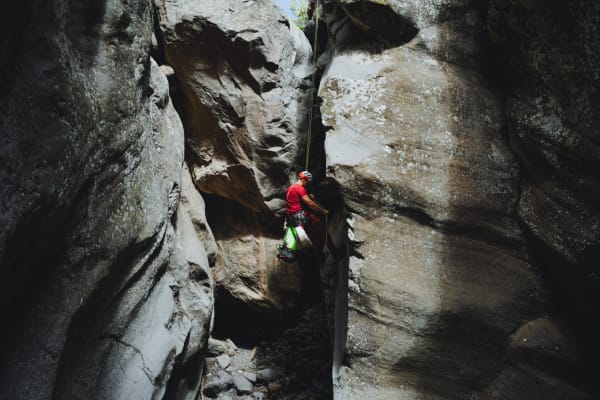
The Pyrenees of Huesca concentrate the most celebrated canyon routes on the Iberian Peninsula, from beginner-friendly narrows in the Río Vero gorge to the multi-pitch technical descents of the Mascún canyon inside the Parque Natural de la Sierra y los Cañones de Guara. Further south, the Picos de Europa massif in Cantabria offers high-altitude slot canyons where snowmelt keeps flows strong well into June. On the Mediterranean side, the Río Verde corridor near Otivar feeds the canyon systems closest to the Costa del Sol, giving coastal visitors access to genuine canyon descents within 40 minutes of the beach. The Gorges of the Jalón in Valencia round out the country's geographic spread with warm-water routes suited to summer progression sessions.
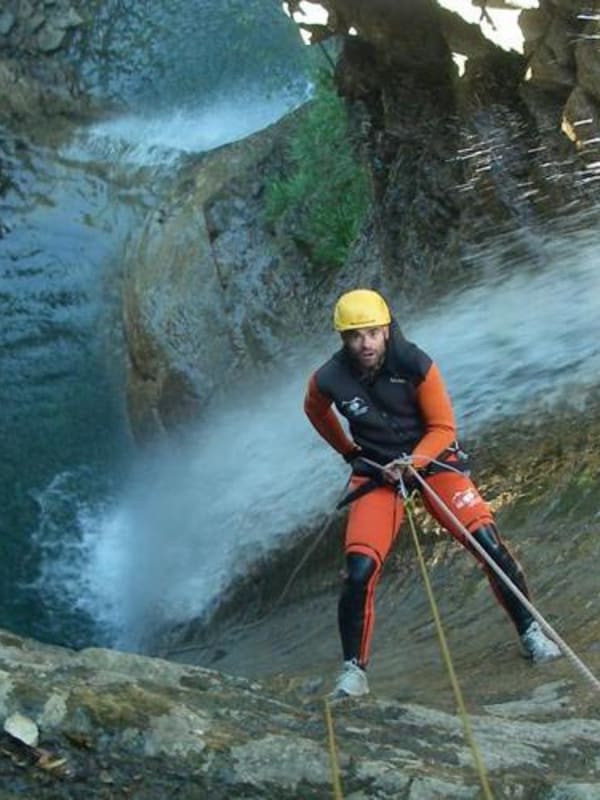
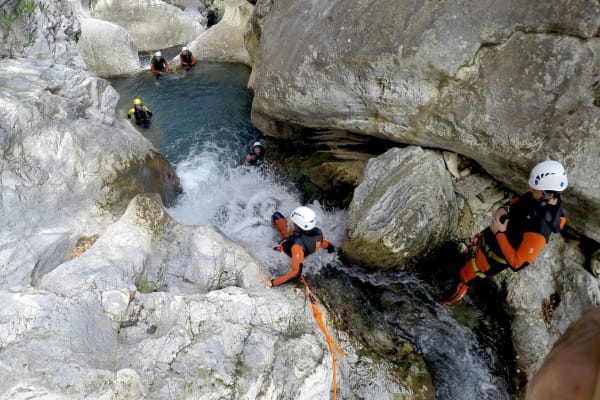
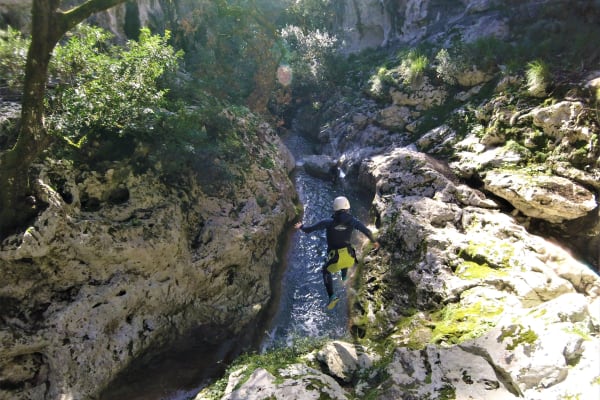
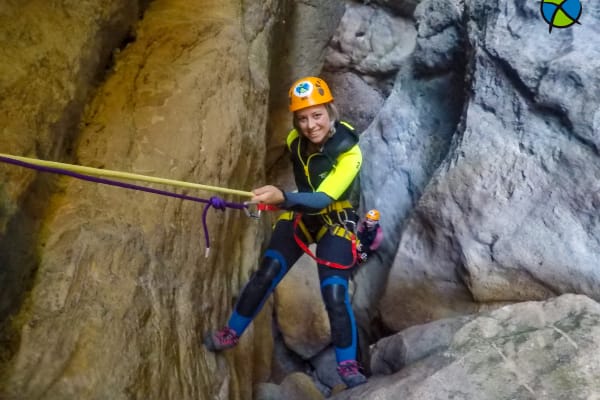
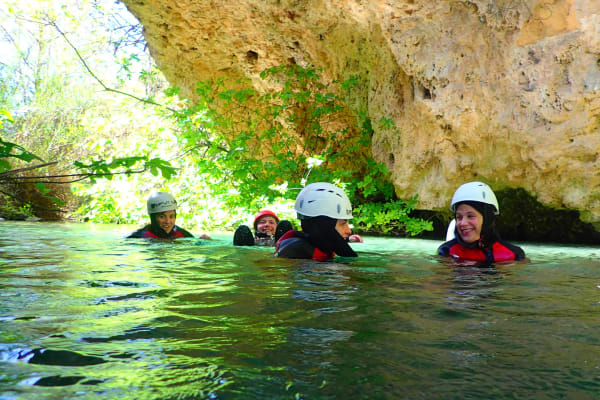
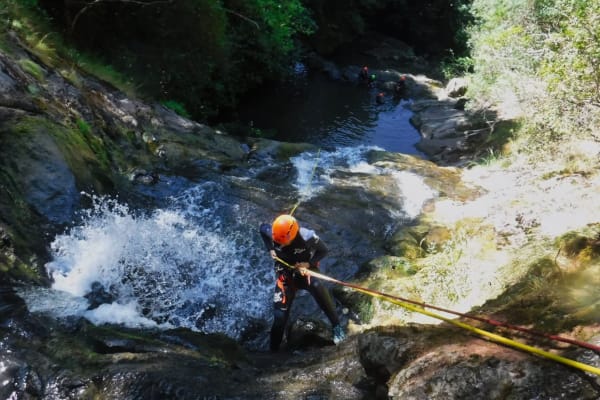
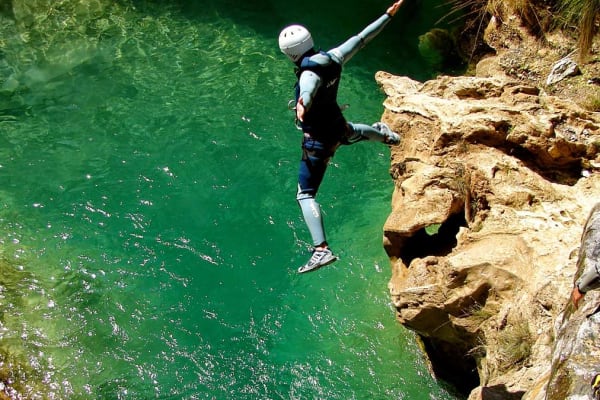
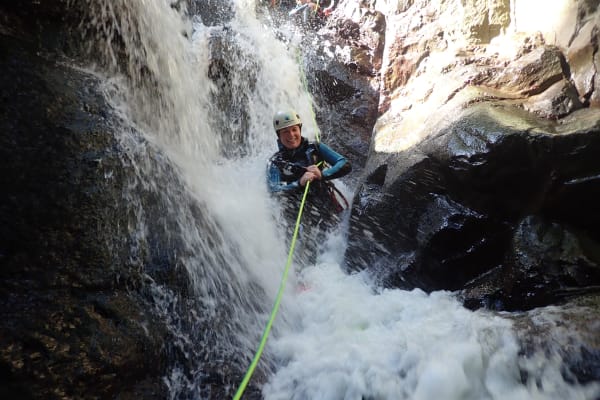
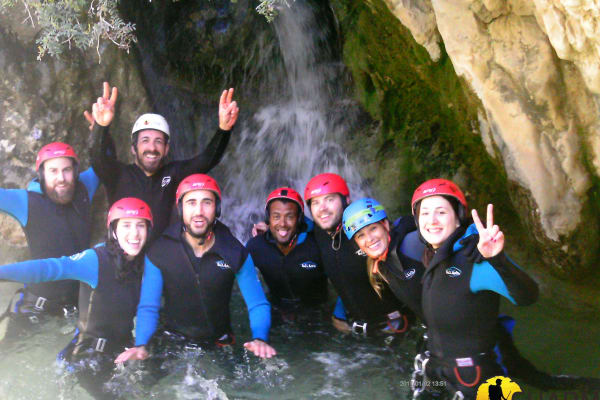
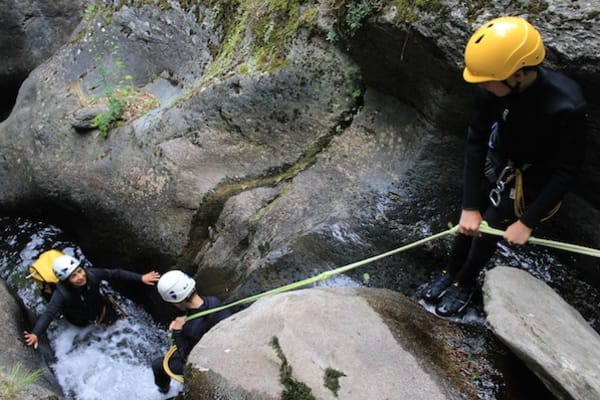
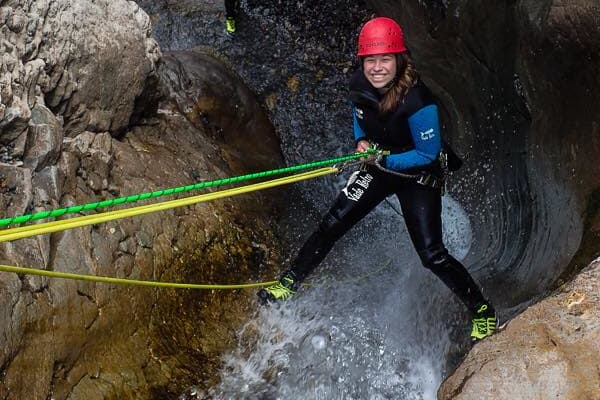
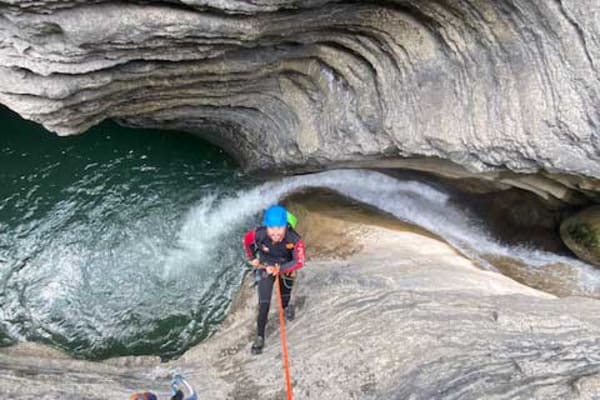
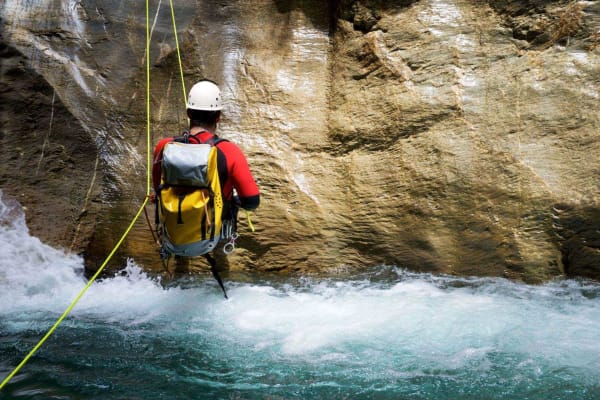
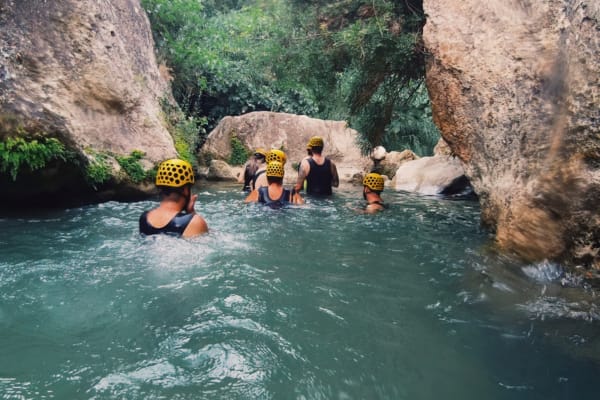
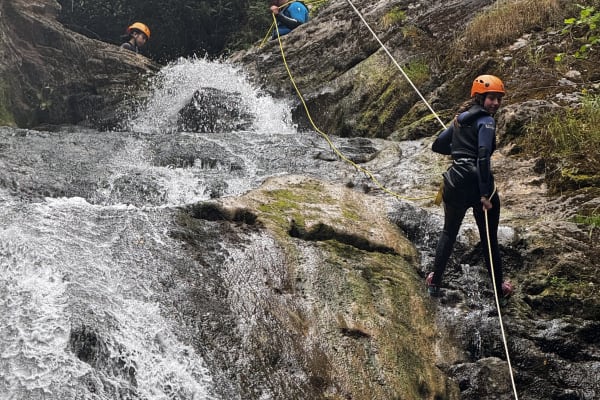
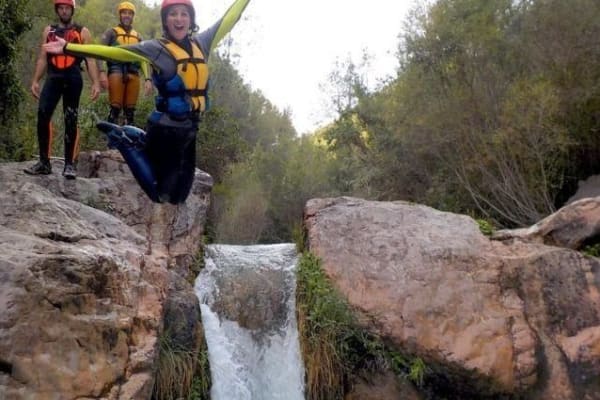
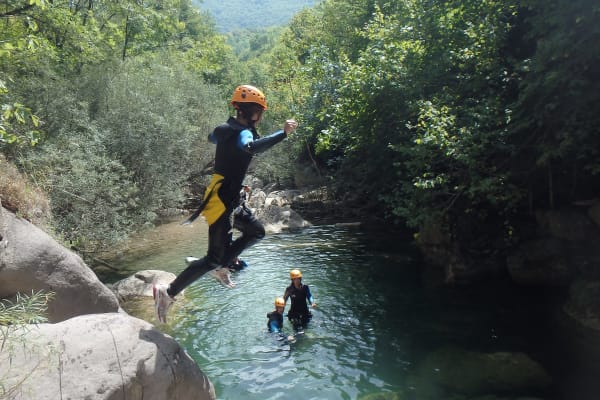
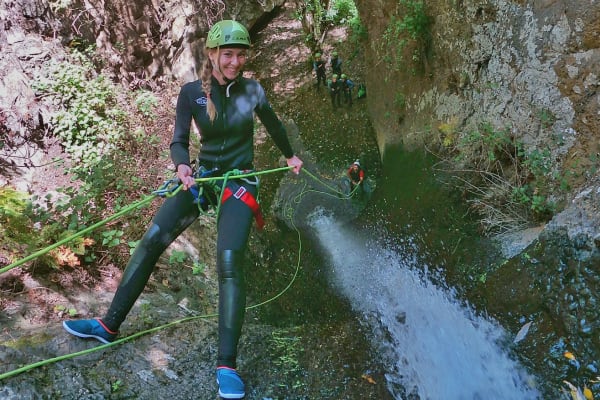
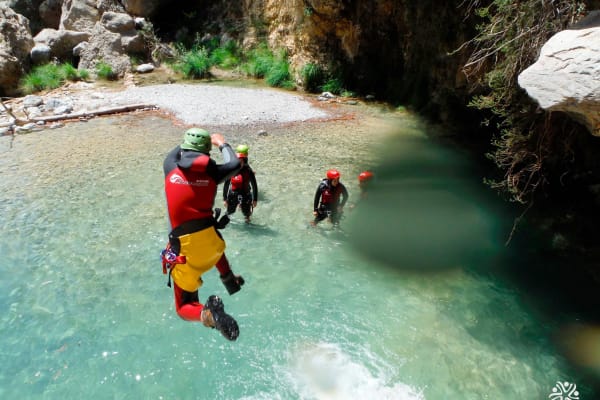
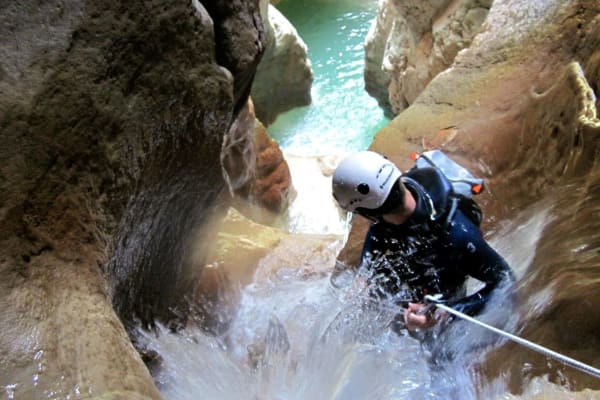
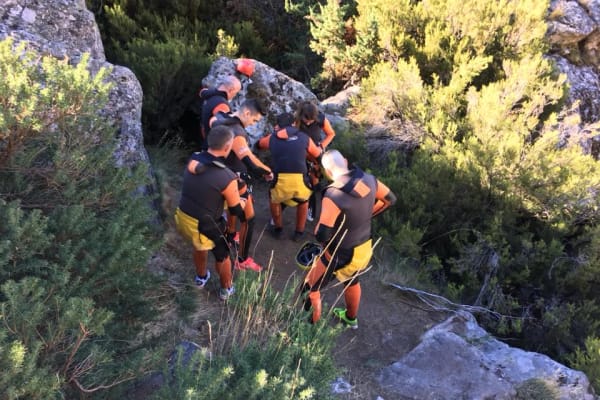
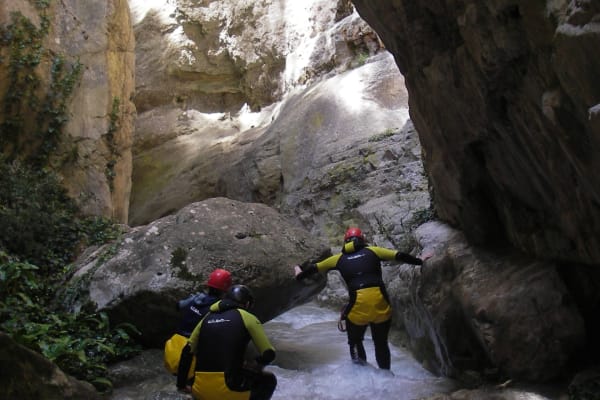
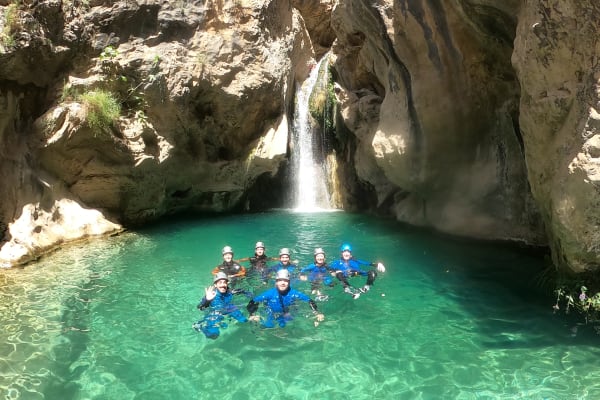
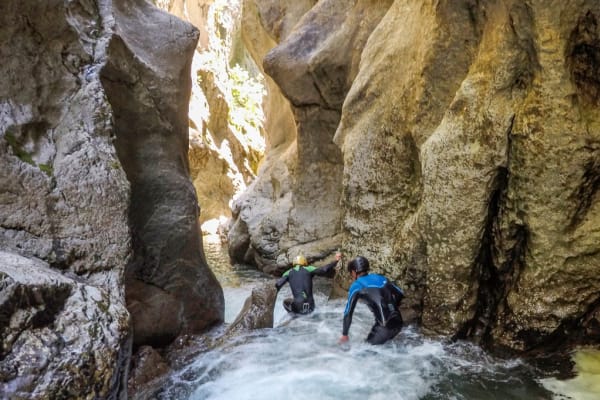

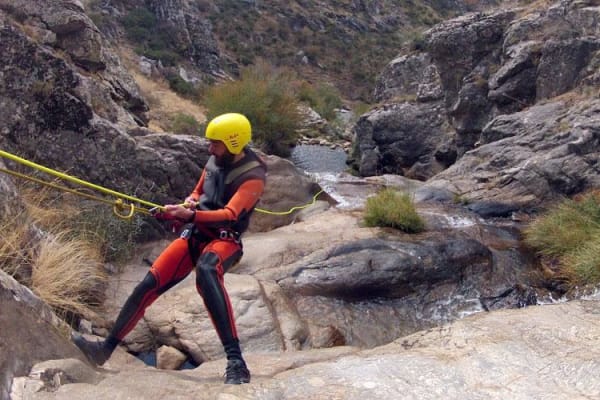
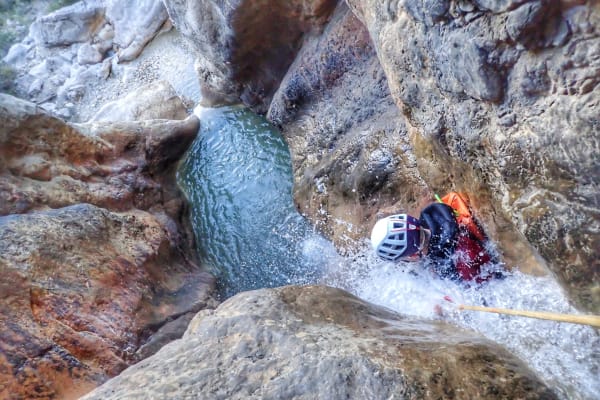
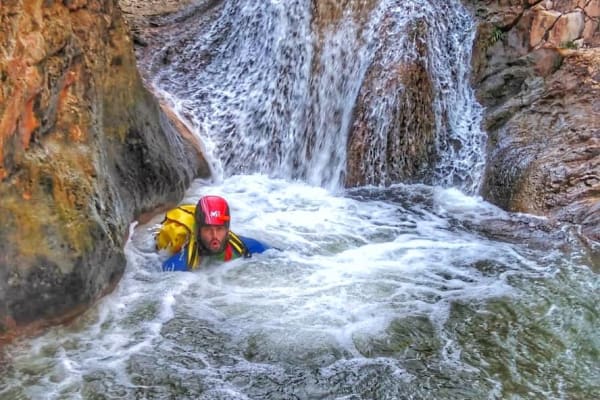
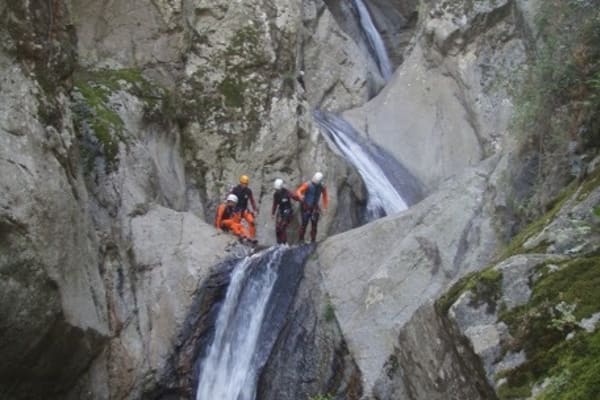
The core season for canyoning in Spain runs from May to September, when air temperatures are stable and water levels are manageable. The Sierra de Guara is at its best from June to August, with water temperatures around 14.18°C. Avoid March, April, November and December in mountain zones, as snowmelt can cause dangerous flash flows in narrow canyon sections.
Prices for canyoning in Spain start at 20 € per person in Marbella, making it the most affordable entry point in the country. Mid-range guided descents in Sierra de Guara range from 48 € to 179 € depending on route difficulty and group size. Most prices include wetsuit, helmet and harness rental, so no extra gear budget is needed.
No prior experience is required for introductory canyon descents in Spain. Beginner routes in Marbella and Gorgo de la Escalera are specifically designed for first-timers, with guided rappelling on low-angle sections and shallow vasque jumps. You must be a competent swimmer. More technical routes in the Huesca Pyrenees require a basic comfort level with rappelling and heights.
Family-friendly canyoning in Spain is most accessible around the Río Verde corridor near Nerja and in the lower-grade routes of Sierra de Guara. Nerja operators hold an average rating of 4.9/5 from 107 verified reviews. Sessions typically last 3h, include all equipment and require children to be at least 8 years old and able to swim independently.
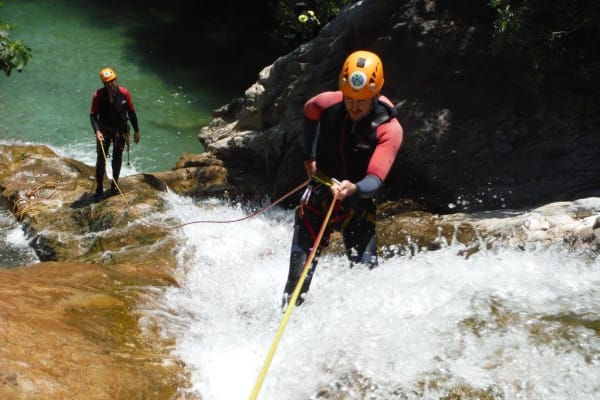
Virtually all licensed operators offering canyoning in Spain supply a neoprene wetsuit, helmet and harness as standard. Neoprene socks and gloves are available on request, especially for early-season descents in the Pyrenees where water sits below 15°C. You bring your own swimwear and closed-toe shoes. Optional underwater cameras can be rented from some Marbella and Sierra de Guara providers.
Discover our complete guide for your first experience.
Updated September 2026