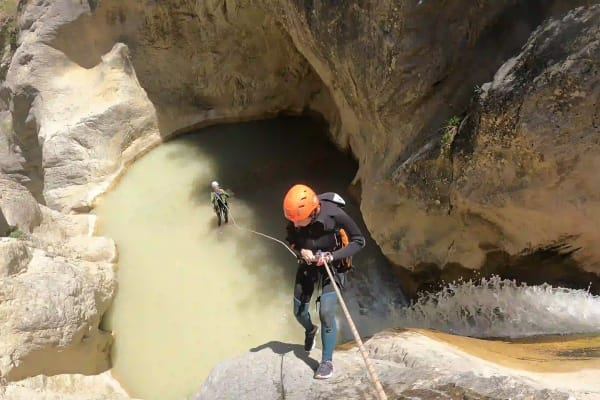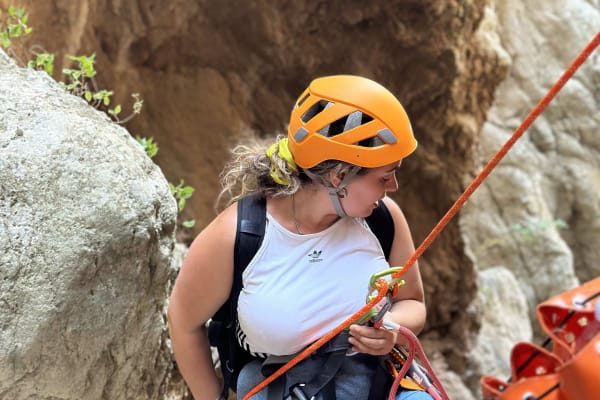
Canyoning in Athens
4 €90–€140
Water temperatures drop to 14°C in the gorges of Crete and the Epirus highlands, making canyoning in Greece a raw, full-body commitment from the first rappel. Greece's canyon terrain is not a beginner playground: drops of 20 to 40 metres, fast-flowing slot canyons carved through limestone, and mandatory technical descents define the standard here. The country's 1,400 islands and deeply fractured mainland geology create a variety of descents found nowhere else in the Mediterranean. This is structured adrenaline, not a scenic walk.
Beyond the cities listed on this page, three regions stand out for their technical character. The Vikos Gorge in the Pindus Mountains of northwestern Greece plunges 900 metres deep, offering multi-pitch rappel sequences through one of the world's deepest gorges, accessible June through September. On Crete, the Imbros Gorge and surrounding slot canyons near Rethymno deliver technical descents with water features from late spring onward, rewarded with consistently high guide ratings. In the Peloponnese, the river canyons cutting through Taygetos Mountain above Kalamata combine sustained swims, natural vasque pools and vertical descents that demand a solid fitness base.
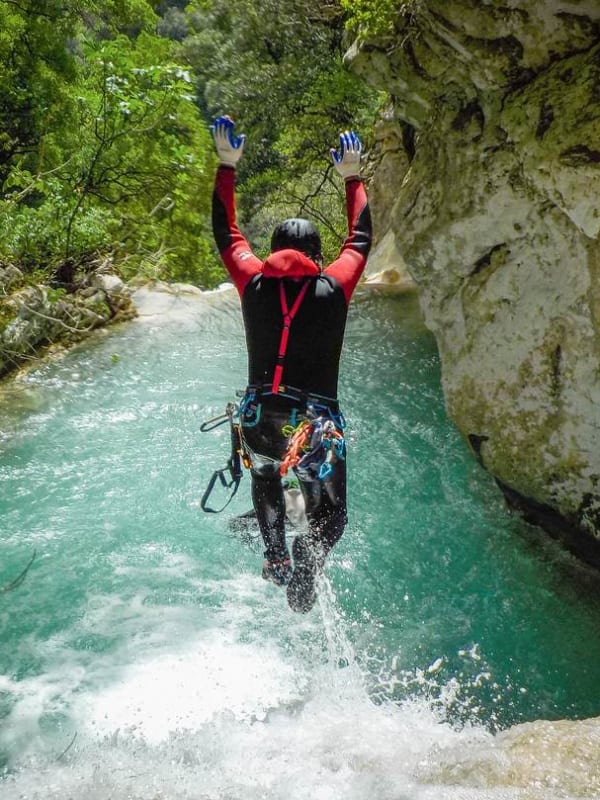
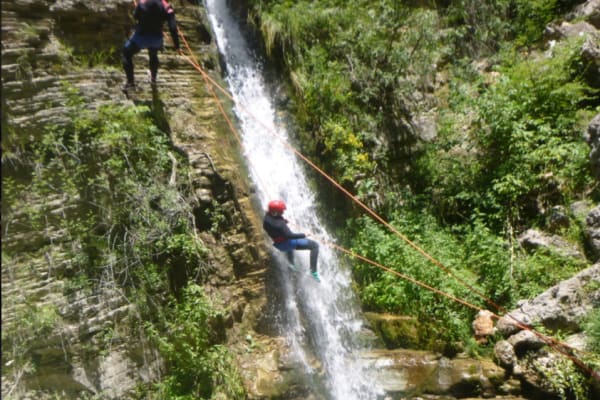
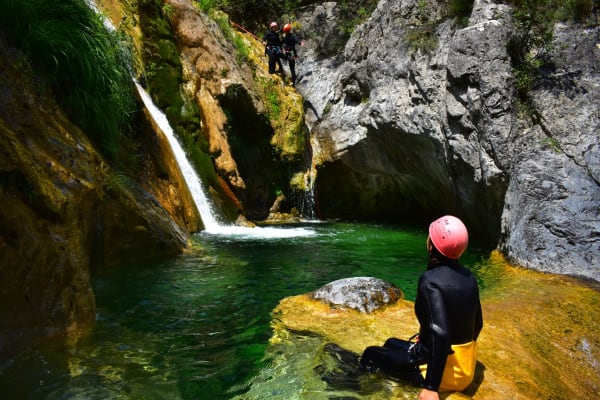
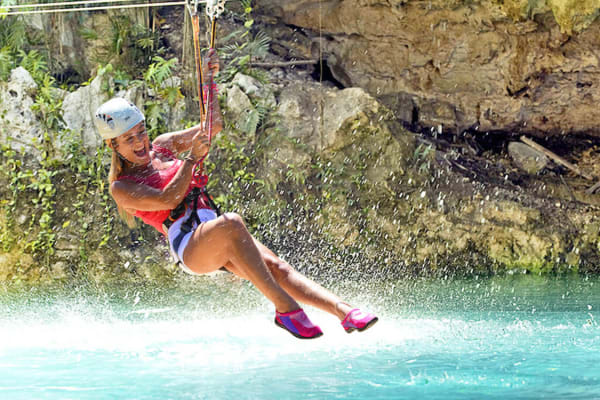
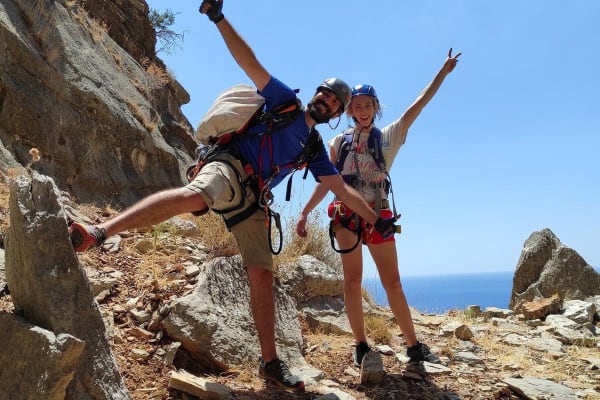
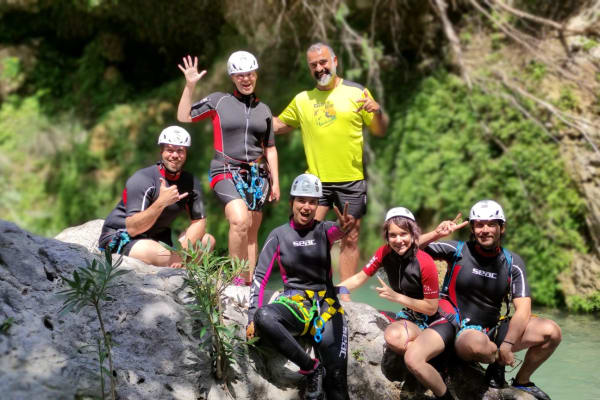
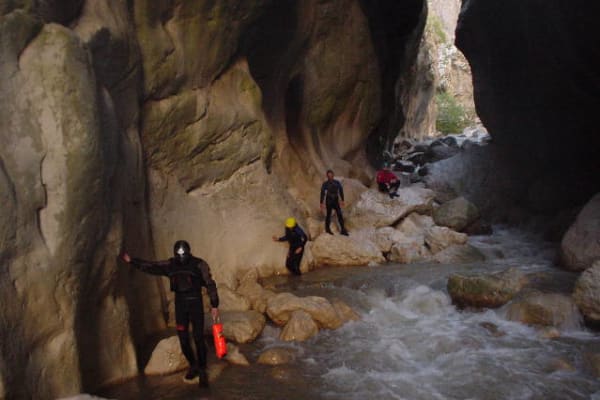
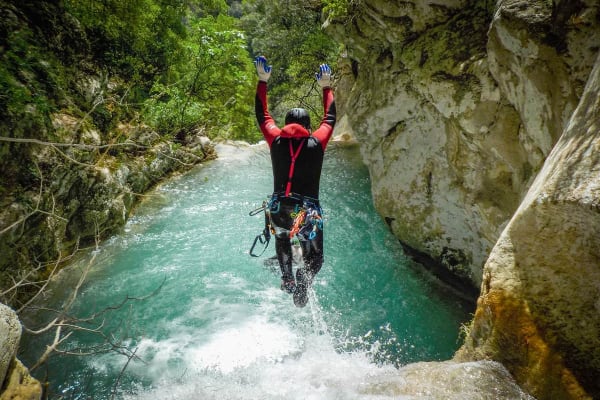

Canyoning in Greece starts at 40 € per person in Grevena, making it the most affordable entry point in the country. Urban departures from Athens range from 90 € to 120 €, while sessions in Kalamata start at 75 €. Prices typically include neoprene wetsuit, helmet, harness and a certified guide for a half-day descent of 3h to 4h.
The main season for canyoning in Greece runs from May to September, when water levels are safe and temperatures are manageable. July and August offer the warmest canyon water, averaging 18.20°C in Cretan gorges and 16.18°C on the mainland. Winter months (January, March, November, December) are flagged as the least favourable due to high water and unpredictable weather.
No prior experience is needed for introductory canyoning in Greece. Operators in Kalamata, Ioannina and Rethymno offer beginner-friendly descents with full briefings on rappel technique and water navigation. You should be comfortable swimming in moving water and have basic aerobic fitness. Advanced multi-pitch routes in the Vikos Gorge area require a higher fitness level and prior canyon exposure.
Rethymno on Crete is the top-rated destination for canyoning in Greece, scoring 5.0/5 across 16 verified reviews. Kalamata follows closely with a 5.0/5 rating from 8 reviews, and Athens holds a 5.0/5 from 3 reviews. Rethymno's consistently high scores reflect the quality of Cretan canyon guides and the accessibility of its limestone gorge descents from late spring.
Standard canyoning tours in Greece supply a neoprene wetsuit, helmet and harness at no extra cost. These three items are mandatory on every certified descent. Operators in cities like Ioannina and Kalamata also provide canyoning shoes and a dry bag for personal items. Participants are advised to bring a swimsuit, water-resistant sunscreen and a change of clothes for after the session.
Discover our complete guide for your first experience.
Updated September 2026