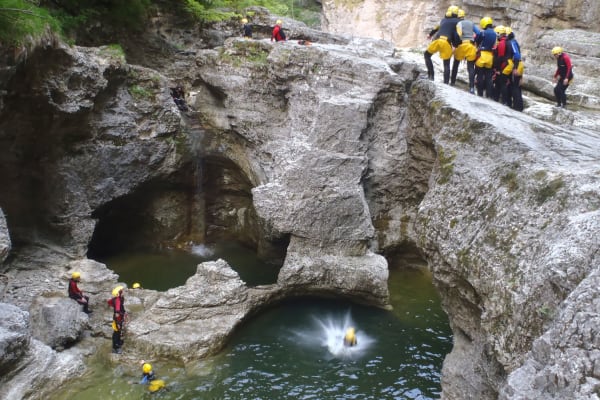
Canyoning in Salzburg
12 €59–€125 5.0 (100)
A 40-metre abseil into a glacial gorge is what canyoning in Austria feels like at its most intense. The Auerklamm in Tyrol delivers exactly that, adding an 18-metre slide and a 16-metre freefall jump into turquoise pools on a single route. Austria's Alpine terrain concentrates vertical drops, ice-cold meltwater and narrow slot canyons within a compact geography, making it one of Europe's most technically demanding canyon destinations. The water temperatures here regularly stay below 12°C even in July.
The Salzburg region anchors the scene with the Almbachklamm, a multi-level gorge where beginner descents sit alongside 25-metre abseils on the advanced track. East Tyrol's Frauenbach stands apart with a 1,100-metre route of near-continuous technical sections and 26 abseiling points, almost no walking passages. The Dachstein Salzkammergut area, a UNESCO World Heritage zone around Lake Hallstatt, counts over 20 navigable canyons ranging from family-friendly routes with 3-metre jumps to full-commitment descents. In the Lech Valley, tributaries such as the Sulzbach and the Roßgumpenbach have carved deep channels into the bedrock, offering some of Tyrol's most challenging progression routes.
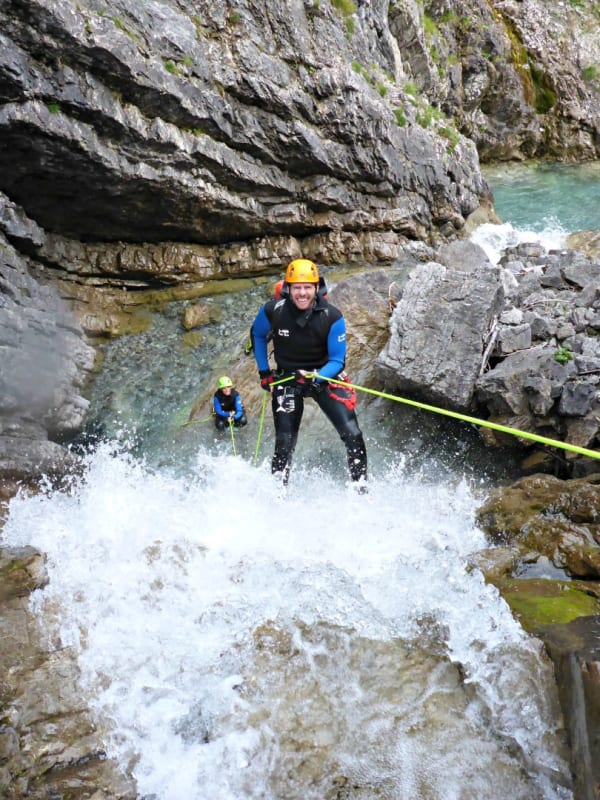

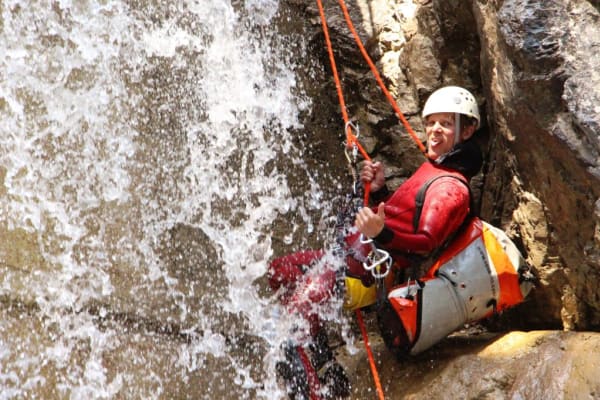
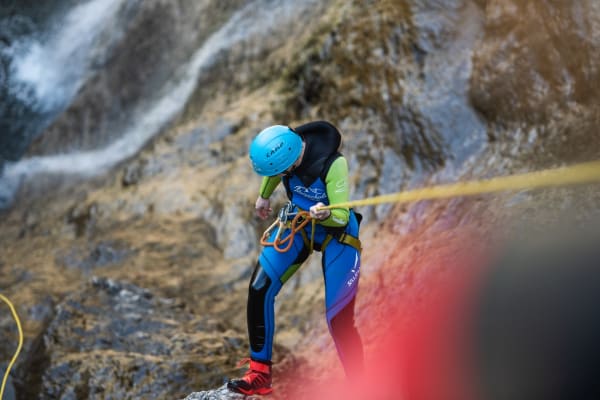
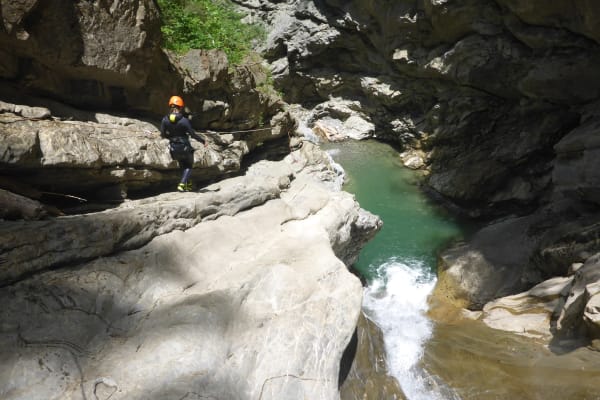
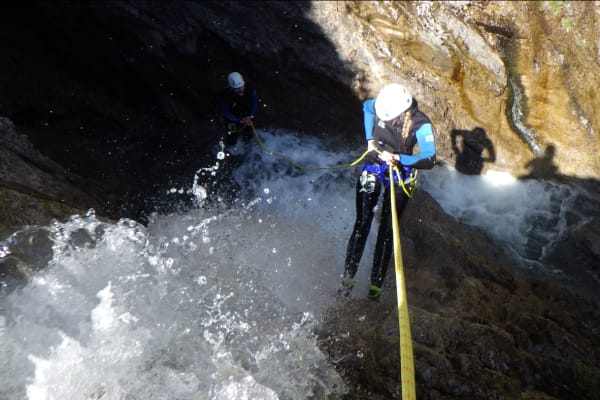

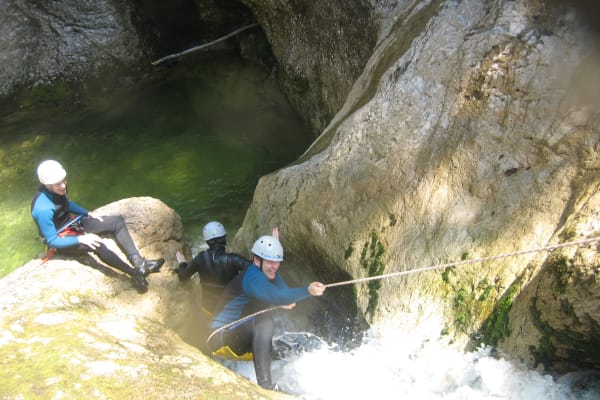
July, August and September are the prime months for canyoning in Austria, with water levels stable and air temperatures high enough to make the 8°C,14°C canyon water manageable. May and June can work but snowmelt raises flow rates sharply in higher-altitude gorges like those in East Tyrol and the Lech Valley, creating conditions better suited to experienced groups.
Canyoning in Austria starts at 55 € per person in Imst and reaches 140 € for premium multi-pitch descents in the Zugspitze area. Salzburg tours are priced between 59 € and 115 €, covering half-day guided descents in gorges such as the Almbachklamm. Prices always include neoprene wetsuit, helmet and harness rental.
No prior experience is needed for beginner canyoning in Austria. Introductory routes in the Dachstein Salzkammergut area and the lower Rosengarten Gorge near Imst are specifically designed for first-timers, with jumps capped at 3 metres and short swimming passages. You need to be a confident swimmer and reasonably fit. State-certified guides handle all technical rope work.
The Auerklamm in Tyrol is the most adrenaline-charged canyoning route in Austria, featuring a 40-metre rappel, an 18-metre slide and a 16-metre jump into a natural pool in one session. For sustained technical difficulty across a longer distance, the Frauenbach in East Tyrol runs 1,100 metres with 26 abseiling points and virtually no flat walking sections.
Operators running canyoning in Austria supply a 5mm neoprene wetsuit, a certified helmet and a harness as standard. You bring swimwear, water-appropriate shoes or rent canyon boots on-site. Some Salzburg-based operators, rated 5.0/5 across 16 reviews, also include a dry bag and neoprene gloves on full-day canyon descents booked between July and September.
Discover our complete guide for your first experience.
Updated September 2026