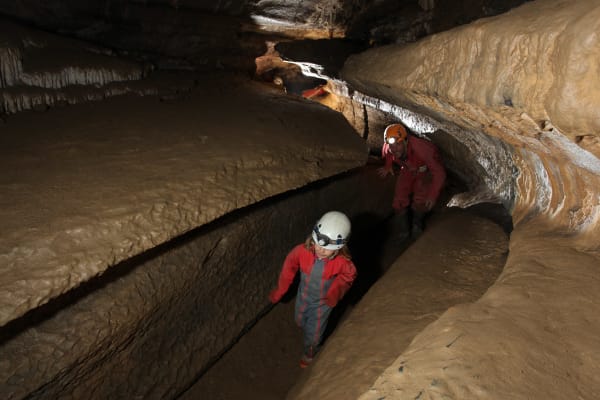
Caving in Ariege
9 €38–€200 5.0 (14)
Caves with constant underground temperatures around 10°C and vertical shafts dropping over 100 metres make caving in France one of Europe's most technically demanding underground pursuits. France sits on some of the world's most extensive limestone networks, where millennia of water erosion have carved out rivers, siphons and chambers that no surface trail can replicate. This is not a gentle stroll in the dark. It's a full-body commitment to a world that rewards preparation.
The Vercors massif, straddling Isère and Drôme, holds the legendary Berger Abyss, a network spanning nearly 40 kilometres with 11 entrances, considered a benchmark for experienced cavers worldwide. Forty minutes south, the Cuves de Sassenage near Grenoble offer a 3-hour underground river route accessible from age 7, combining wading and scrambling. The Dévoluy massif in the Southern French Alps concentrates over 600 mapped caves in a single limestone range, including ice-cave corridors that require crampons in winter. Further south, the Gorges de Galamus at the crossroads of Aude and Pyrénées-Orientales deliver a through-trip with rappels up to 17 metres inside a narrow canyon cave, accessible year-round.
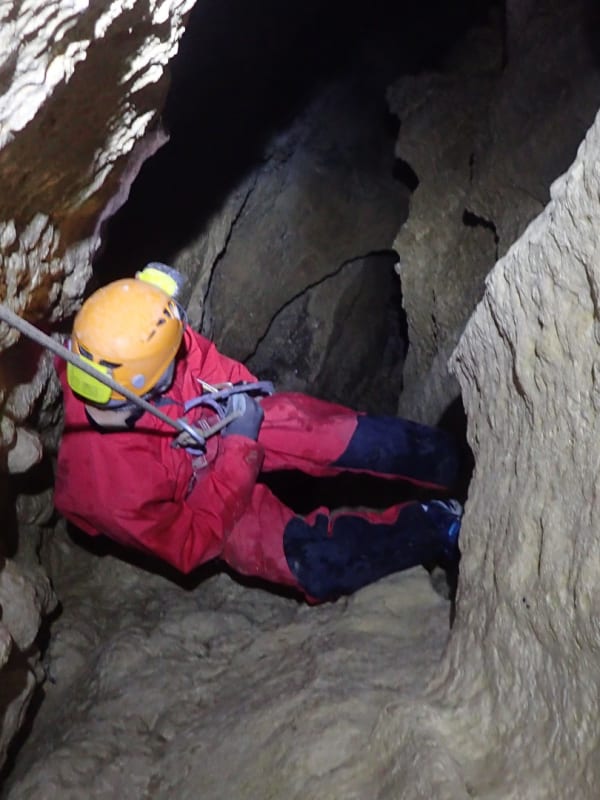
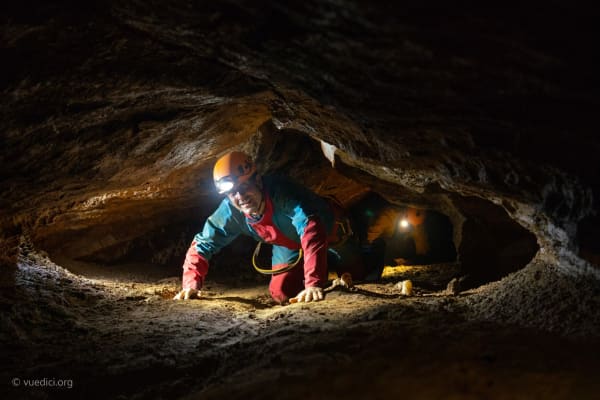
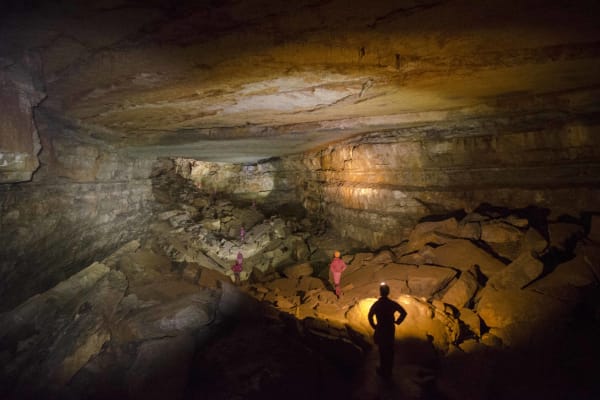
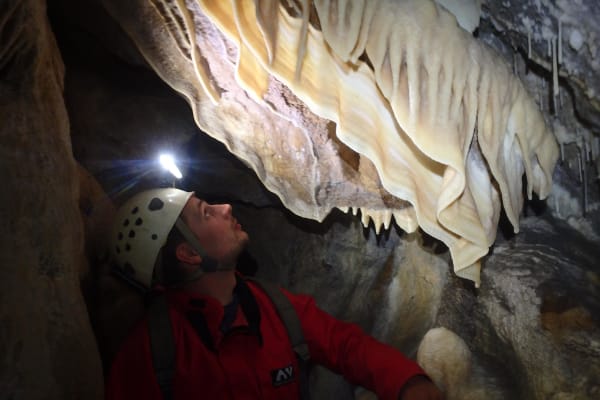
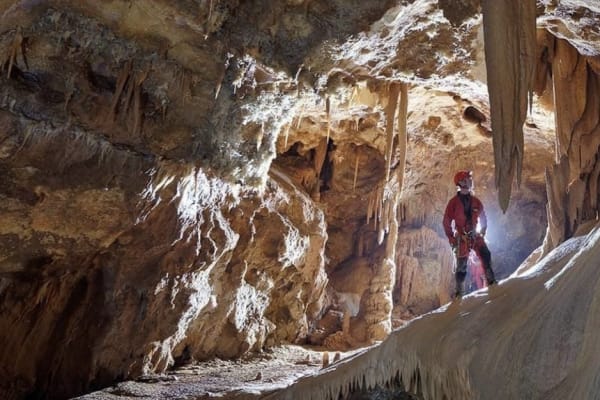
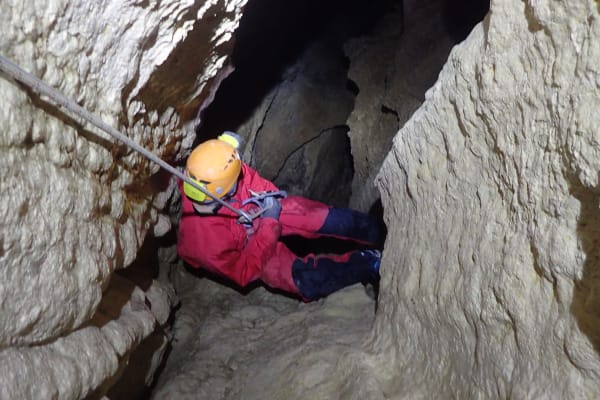
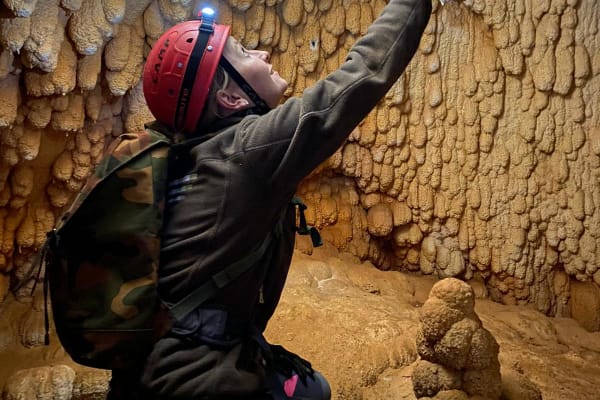
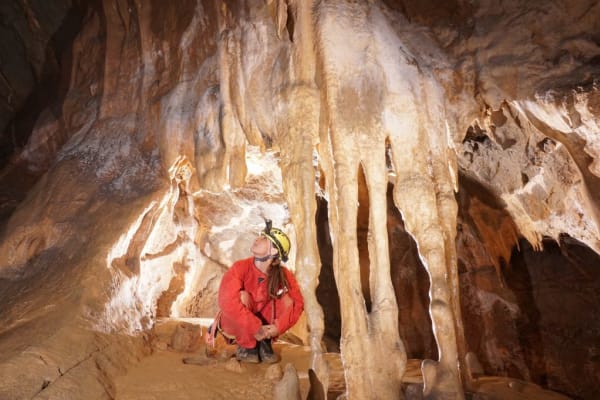
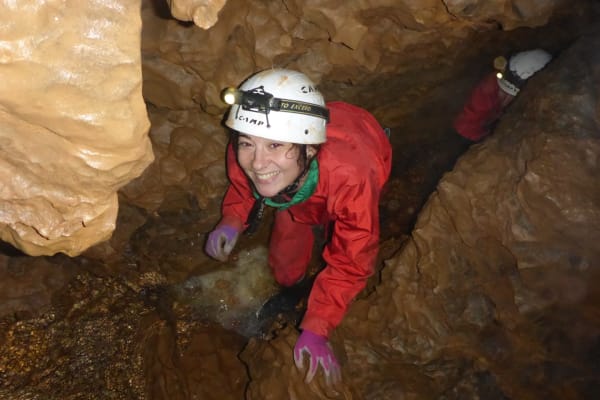
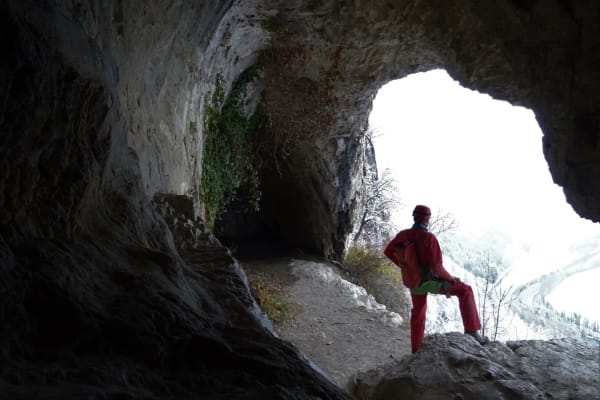
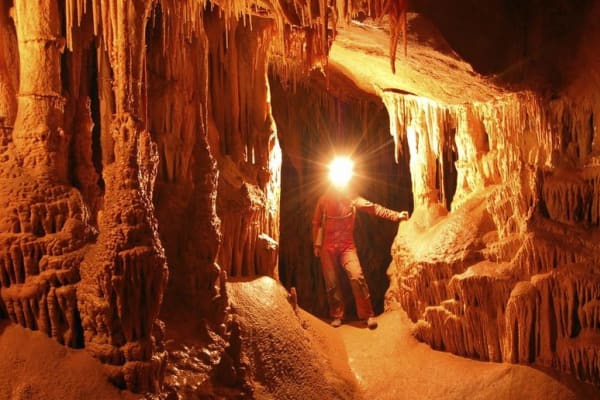
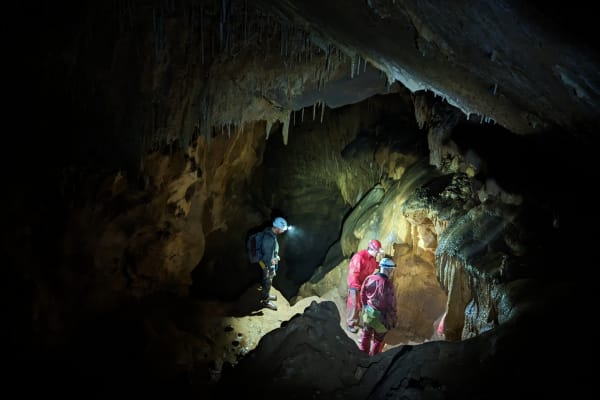
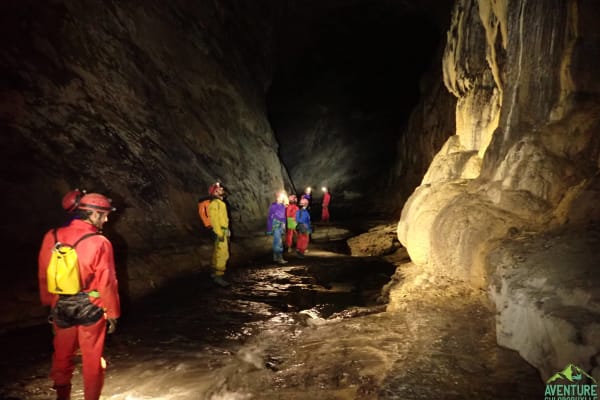
Caving in France starts at 38 € per person for a beginner half-day session in Ariege, with guided full-day experiences in Ardèche reaching 130 €. Longer technical routes or private groups in Pyrénées Orientales are priced between 40 € and 64 €. Most operators include wetsuit, helmet and harness in the listed price, so there are no major hidden equipment costs.
Caving in France is possible year-round because cave temperatures remain stable at around 10°C regardless of outside conditions. Summer (June to September) is the most popular period as surface access to sites like the Gorges de Galamus and the Vercors massif is easiest. Heavy winter rainfall can raise underground river levels and restrict certain routes, so check with your operator between January and March.
Most introductory caving tours in France require no prior experience and accept participants from age 6 upward, as in Ariege and Pyrénées Orientales. Technical full-day routes such as the Gournier cave in the Vercors (8 hours) demand good cardiovascular endurance, comfort in tight passages and confidence on a single rope. Operators assess fitness during booking and assign appropriate cave levels.
Yes, caving in France is well-regulated for beginners when booked through operators affiliated with the Fédération Française de Spéléologie. Guides hold a state diploma (Brevet d'État mention Spéléologie) and supply all protective equipment including helmets, harnesses and neoprene suits. Ardèche operators average 4.98/5 from 44 reviews, reflecting consistently high safety and instructional standards across the region.
Ariege in the French Pyrenees is the most affordable entry point, with sessions from 38 € and a perfect 5.0/5 rating across 14 reviews. Ardèche is the highest-volume region with 10 guided tours and 44 verified reviews at 4.98/5, making it the statistically most reviewed choice. Both regions offer introductory speleology routes suitable for families with children aged 6 and over.
Updated September 2026