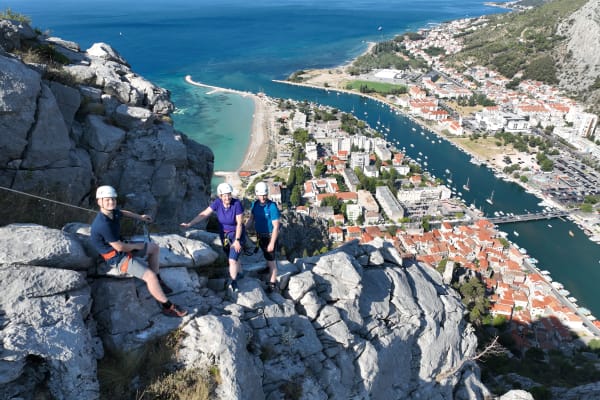
Via Ferrata in Omiš
2 €35 4.7 (136)
Some via ferrata routes in Croatia gain over 400 meters of vertical elevation, clipping directly into iron rungs bolted into raw limestone above the Adriatic. Via Ferrata in Croatia delivers one of the most visually dramatic climbing experiences in Southern Europe, combining sheer coastal cliffs with the technical challenge of a protected mountain route. The rock here is karst, sharp and grippy, forged by centuries of sea wind and rain. That geology is the first thing every climber notices.
The Paklenica National Park massif in Northern Dalmatia hosts multi-pitch routes rated from D to ED, where fixed steel cables traverse the vertical walls of Velika Paklenica gorge. Further north, the Velebit mountain range offers longer alpine-style ferrata itineraries at altitude, with exposed ridgelines and cooler temperatures even in July. On the island of Pag, near Novalja, shorter introductory routes sit directly above the sea, rewarding climbers with views across the Kvarner Gulf at each anchor point.
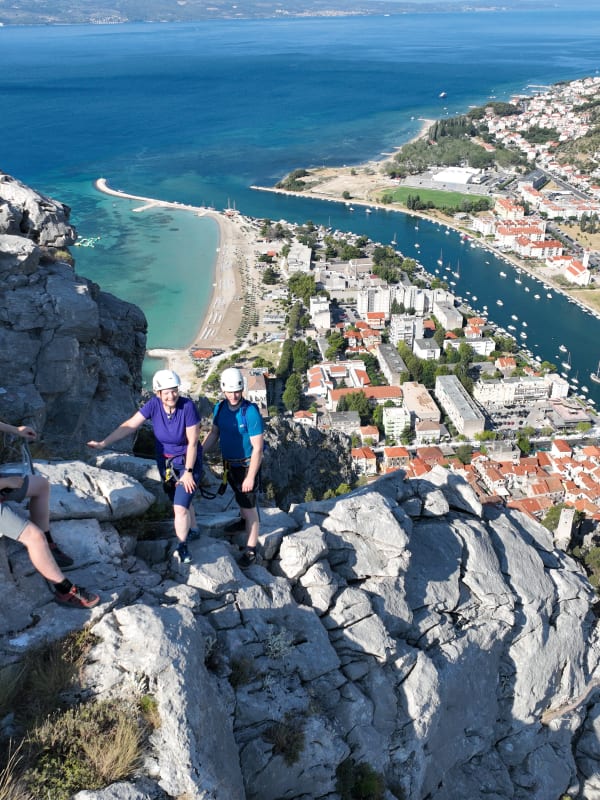
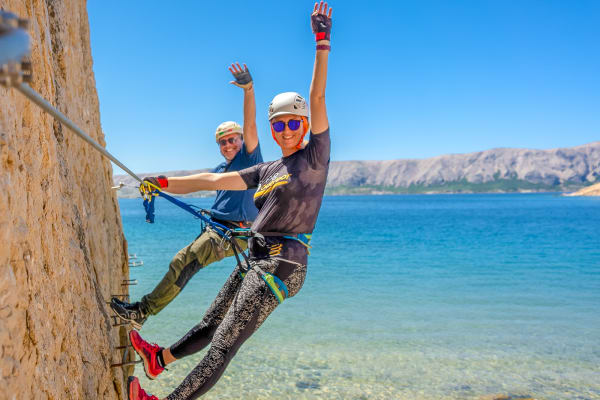
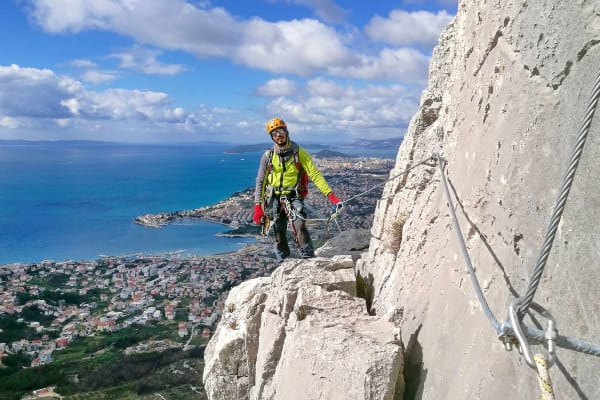
Prices for Via Ferrata in Croatia start at 35 € in Omiš, the most affordable option in the country. In Novalja, guided tours range from 40 € to 72 € depending on route difficulty and duration. In Split, the price is fixed at 50 € per person. Most operators include harness, helmet, and via ferrata lanyard in the listed price, so there are no hidden equipment rental fees.
The optimal season for Via Ferrata in Croatia runs from May through October, with peak conditions in June, July, August, and September. Summer air temperatures on the Dalmatian coast regularly exceed 28°C, so early morning departures (before 9:00) are recommended to avoid heat on exposed limestone sections. November through April brings wet, slippery rock and limited operator availability.
No prior climbing experience is required for Via Ferrata in Croatia. Routes in Omiš and near Novalja are graded for beginners, with continuous steel cable protection and iron rungs eliminating the need for rope technique. A moderate fitness level is expected, particularly for routes in the Velebit range that involve 300+ meters of ascent. Guides assess participants before selecting the appropriate route difficulty.
Operators offering Via Ferrata in Croatia supply the full kit: a harness, a Y-shaped lanyard with shock-absorbing energy absorbers, and a certified helmet. Personal hiking shoes with ankle support are sufficient. Climbing shoes are not required. Operators in Omiš and Split typically provide a safety briefing on clipping technique, which is the only technical skill participants need to master before departure.
Split is currently the top-rated city for Via Ferrata in Croatia, scoring 5.0/5 based on 3 verified reviews. The route operates on the limestone cliffs of the Dalmatian coast, accessible within 30 minutes of Split's city centre. For budget-focused climbers, Omiš offers the lowest entry price at 35 € and sits just 28 km south of Split along the Cetina river canyon.
Discover our complete guide for your first experience.
Updated September 2026