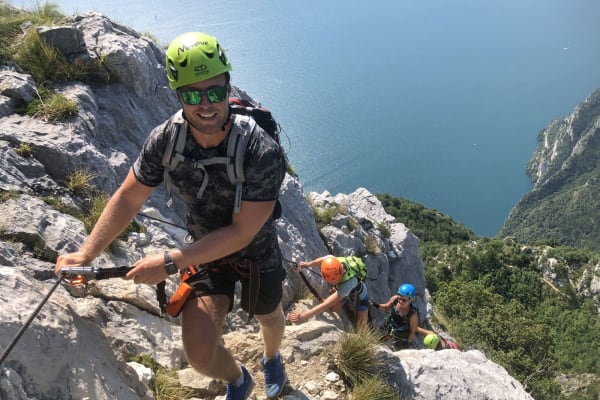
Via Ferrata in Lake Garda
12 €60–€130 5.0 (46)
Some via ferrata routes in Italy top 2,500 meters of altitude, pinning climbers to sheer rock faces with nothing but iron rungs and a cable between them and the void. Via Ferrata in Italy is not a beginner hike dressed up as adventure, it is a vertical discipline born in the Dolomites during World War I, where soldiers fixed steel ladders into cliff walls to move troops across impossible terrain. The exposure is real, the heights are real, and the reward is equally concrete.
The country delivers genuinely distinct terrain across its mountain ranges. The Brenta Dolomites in Trentino offer classic high-alpine routes with dramatic rock towers and glacier-carved couloirs, suited to intermediate and advanced climbers, accessible from bases like Andalo. The Monte Baldo massif rising directly above the western shore of Lake Garda combines accessible via ferrata d'initiation with panoramic lake views at around 2,200 m, making it one of Italy's most popular entry points for the discipline. Further north, the Cadore valley in the eastern Dolomites frames iconic routes with UNESCO-listed scenery and sustained vertical passages that reward experienced climbers seeking full-day itineraries.
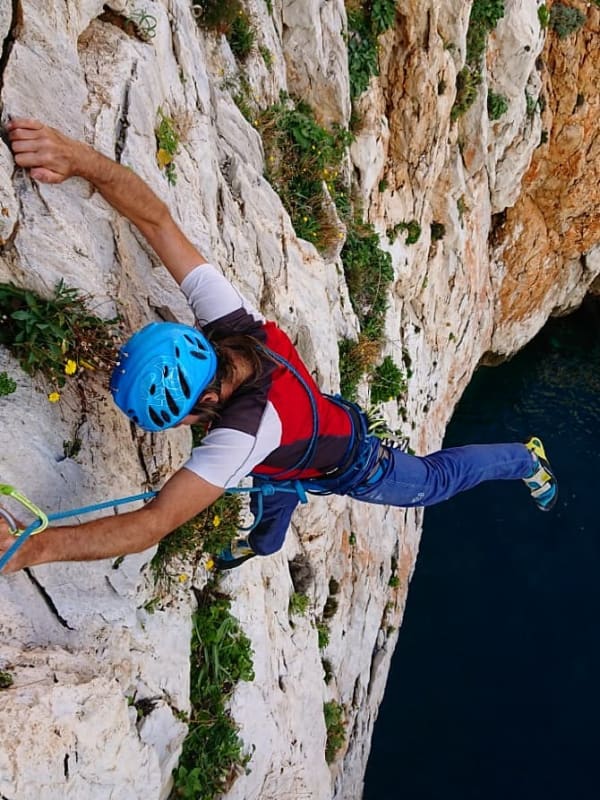
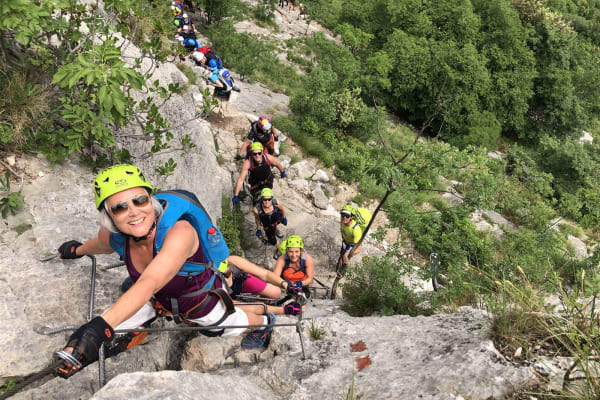
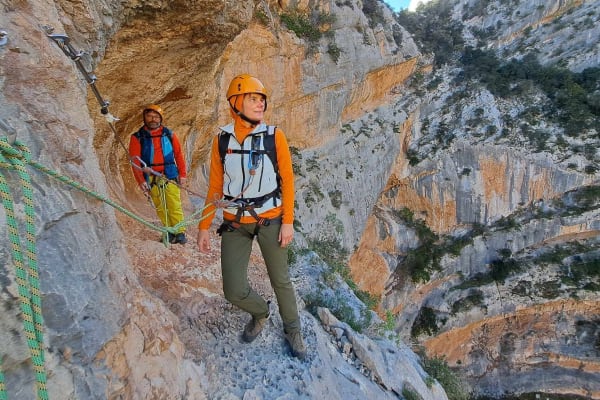
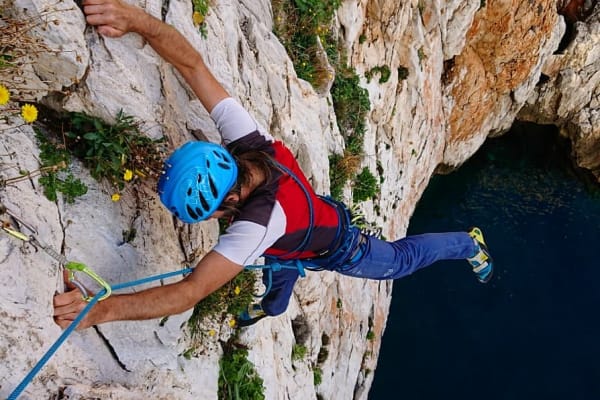
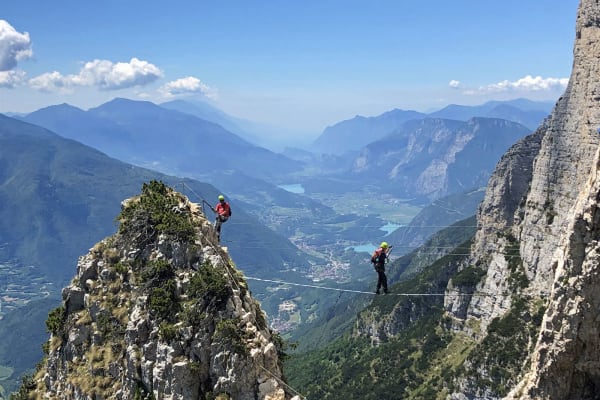
Guided via ferrata in Italy starts at 60 € per person in Lake Garda and Arco, rising to 250 € in Iglesias. Most half-day experiences are priced in the 60–100 € range and include harness, helmet and lanyard rental. Private guiding or multi-pitch full-day itineraries in the Dolomites typically push prices toward the upper end of that bracket.
The via ferrata season in Italy runs May through October. July and August deliver the most reliable dry conditions on high-alpine routes in the Dolomites and above Lake Garda. Spring and autumn access depends on residual snow and ice on fixed cables above 2,000 m. Operators in Arco and Lake Garda can sometimes extend the season into late October thanks to their lower starting elevations.
Via ferrata in Italy ranges from beginner-friendly initiation routes near Lake Garda (rated F to PD on the Hüsler scale) to demanding multi-hour ascents rated TD or ED. No prior climbing experience is required for introductory routes, but good general fitness, a head for heights and comfortable hiking boots are the minimum baseline operators expect.
Most operators running via ferrata in Italy supply a full via ferrata kit: harness, helmet and a Y-shaped dynamic lanyard. Personal hiking boots are always required as they are not rentable. At altitude above 2,000 m, common on high Dolomites routes, guides recommend bringing a windproof jacket and gloves regardless of the season, as exposed ridgelines can drop well below 10°C even in summer.
Lake Garda is the most reviewed destination for via ferrata in Italy, scoring 5.0/5 across 46 verified reviews with routes starting at 60 €. Arco, a few kilometers to the north, adds 18 further 5.0/5 reviews and dense concentration of itineraries on the limestone walls of the Sarca valley. For high-altitude Dolomites terrain, Andalo provides routes starting at 120 €.
Discover our complete guide for your first experience.
Updated September 2026