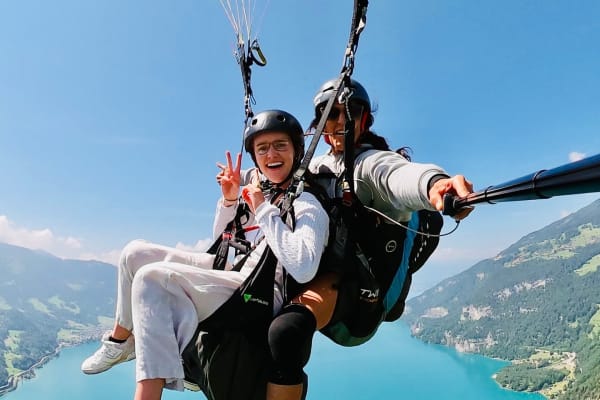
Paragliding in Interlaken
9 €181–€210 5.0 (1349)
Launch from 2,677 meters above sea level and paragliding in Switzerland delivers one of the most technically demanding tandem experiences in the Alps. The Swiss Alps compress extreme altitude, sharp thermals, and glacier-cooled air into a single flight corridor, making Swiss airspace a reference benchmark for certified pilots worldwide. This is not a scenic balloon ride. It's a high-altitude, adrenaline-rated discipline where your harness and glider are your only separation from several thousand feet of vertical drop.
The Lauterbrunnen Valley is the standout terrain for advanced panorama flights, with takeoff ramps above Mürren at 1,638 m offering direct sight lines to the Eiger, Mönch and Jungfrau. North of there, Mount Pilatus above Lake Lucerne frames a completely different flight profile: shorter thermic windows, a tighter ridge system, and landing zones near the lake shore. In the Engadin Valley near Davos-Klosters, high-altitude ridge soaring above 2,000 m extends airtime significantly during stable summer anticyclones, making it a preferred spot for pilots seeking longer glide distances.
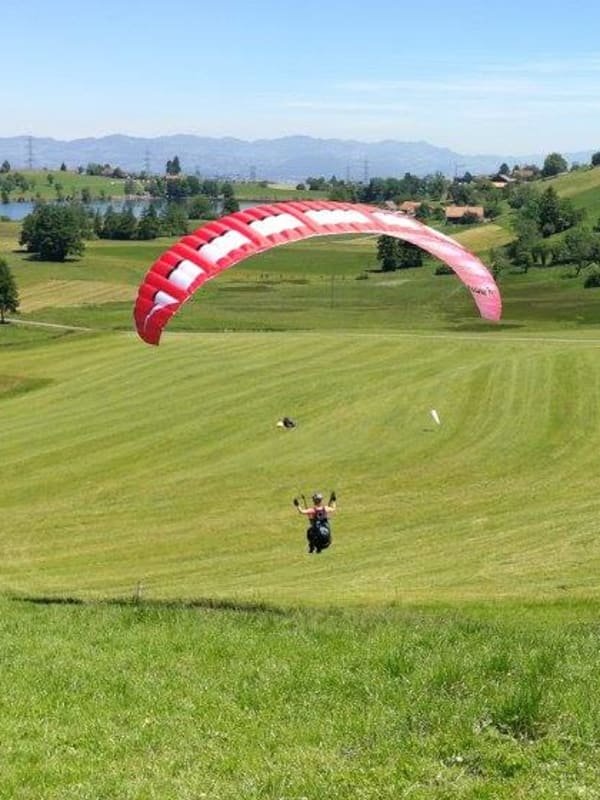
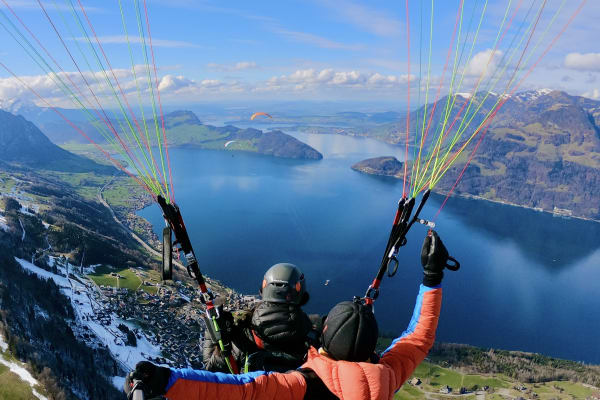
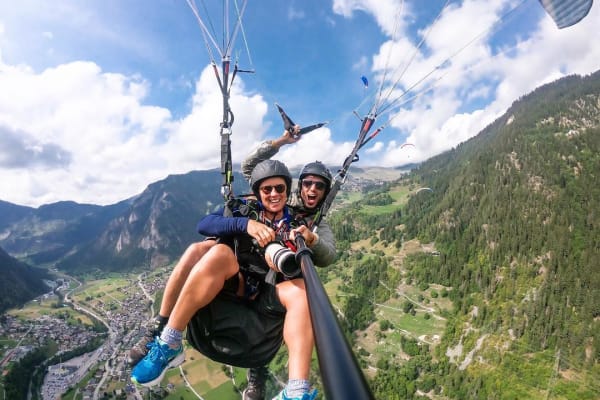
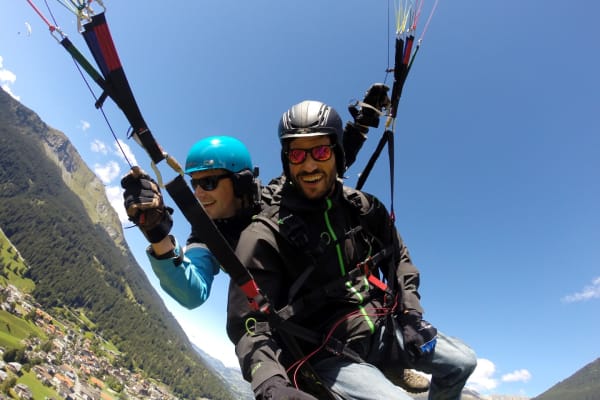
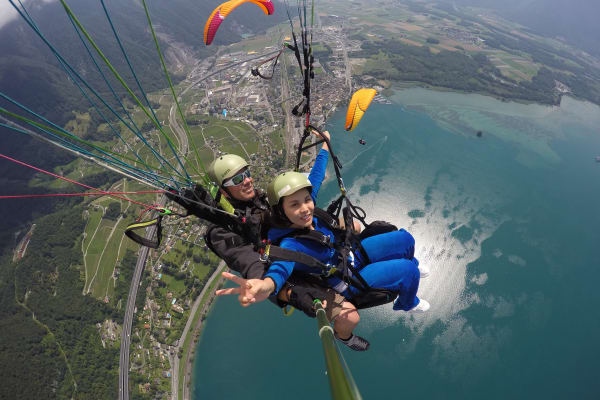
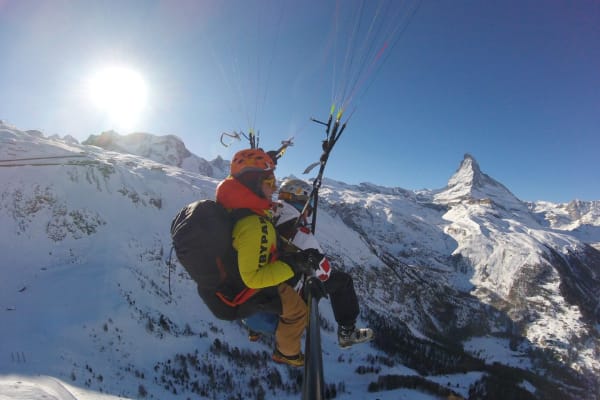
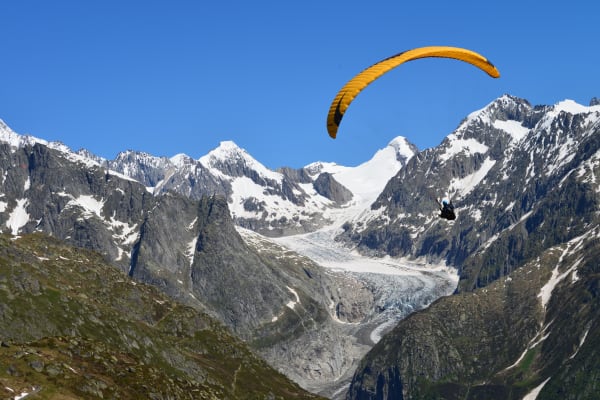
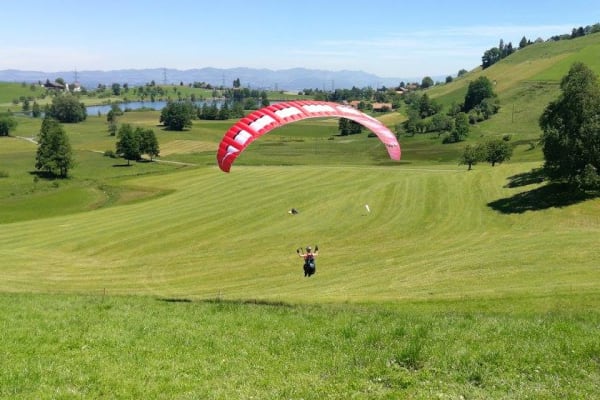
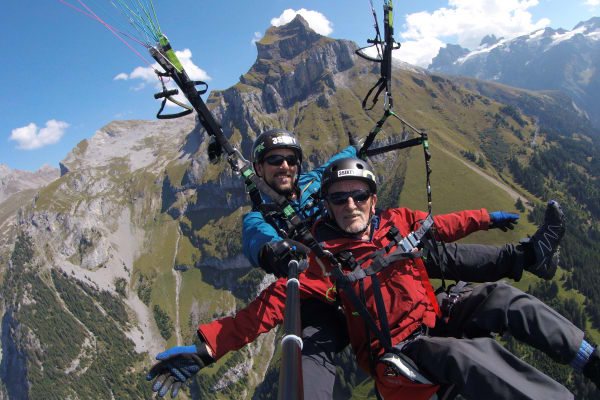
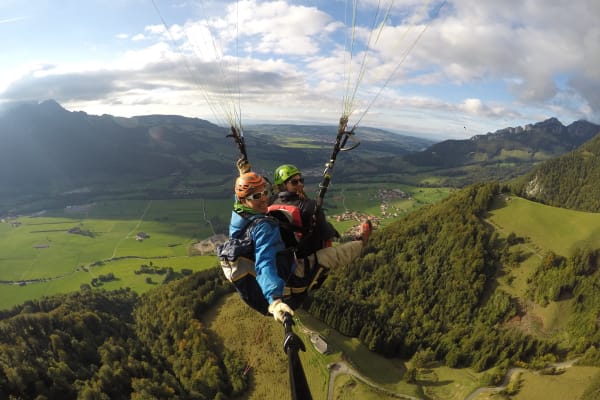
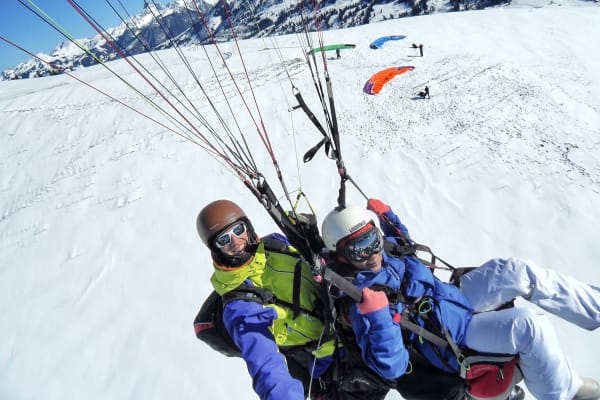
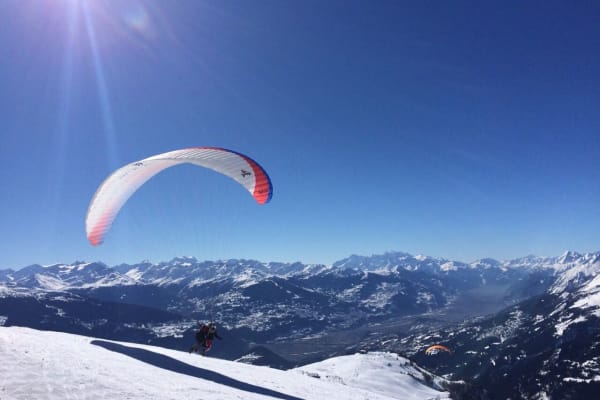
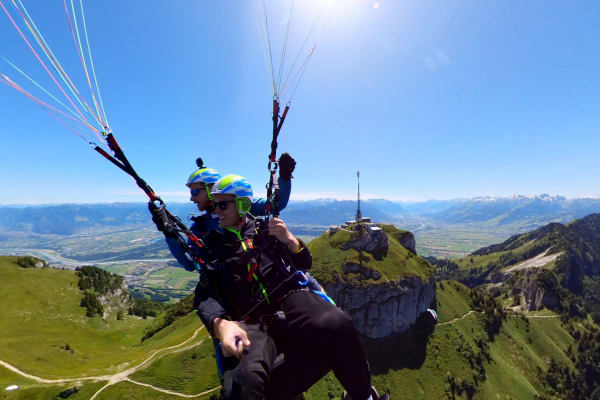
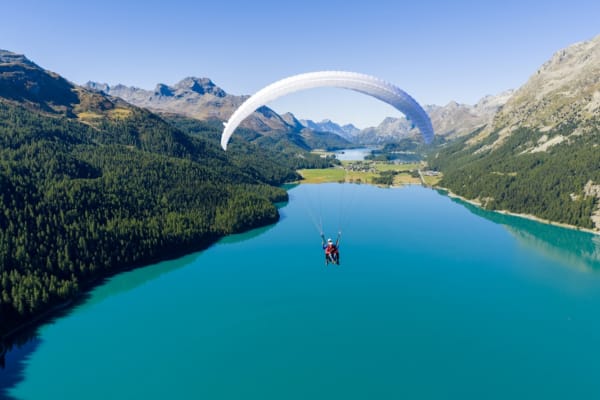

Paragliding in Switzerland starts at 132 € for a tandem flight in Zurich and ranges up to around 209 € in Interlaken and Davos-Klosters for a standard panorama flight. Specialist high-altitude routes, such as the Mürren takeoff above the Lauterbrunnen Valley, can exceed 215 €. Price variation reflects launch altitude, flight duration (20 to 45 minutes), and included transport to the takeoff site.
The primary season for paragliding in Switzerland runs from May to September, with June through September offering the most stable thermal conditions. July and August deliver the longest airtime windows above sites like the Engadin Valley and Mount Pilatus, where afternoon thermals peak between 11:00 and 15:00. Winter tandem flights are available at select Interlaken operators but depend heavily on weather windows and alpine snowpack conditions.
Interlaken rates highest for paragliding in Switzerland with a verified score of 5.0/5 across 1,349 reviews. The Beatenberg launch above Lake Thun and the Mürren ramp facing the Jungfrau are the two most-booked takeoff sites in the country. Davos-Klosters also holds a 5.0/5 rating and suits pilots looking for longer ridge-soaring flights above 2,000 m during stable high-pressure periods.
No prior experience is needed for a tandem paragliding flight in Switzerland. You fly strapped into a dual harness controlled entirely by a certified SHV-FSVL licensed pilot. Most operators, including those in Interlaken and Lucerne, require participants to be between roughly 35 kg and 110 kg. A short safety briefing of 5 to 10 minutes covers body position at takeoff and landing before you run off the ramp.
Vertigo risk during paragliding in Switzerland is low on standard tandem flights because the glider maintains a stable, gentle descent angle rather than sudden drops. Swiss pilots are certified under SHV-FSVL regulations and carry a reserve parachute on every flight. Launch sites like Beatenberg and Mürren are chosen for consistent wind patterns that minimize turbulence. Guests with a history of severe motion sickness should discuss flight conditions with the operator before booking.
Discover our complete guide for your first experience.
Updated September 2026