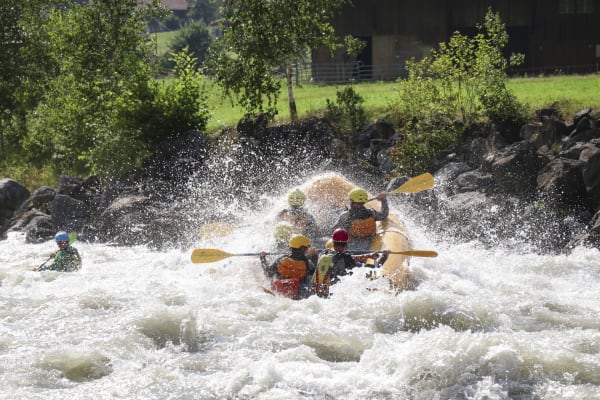
White Water Rafting in Interlaken
4 €121–€154 4.7 (10)
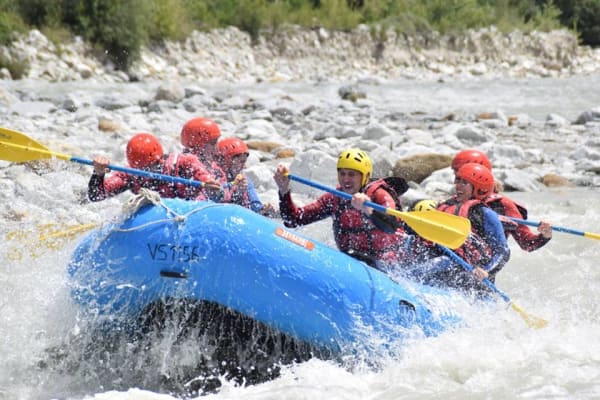
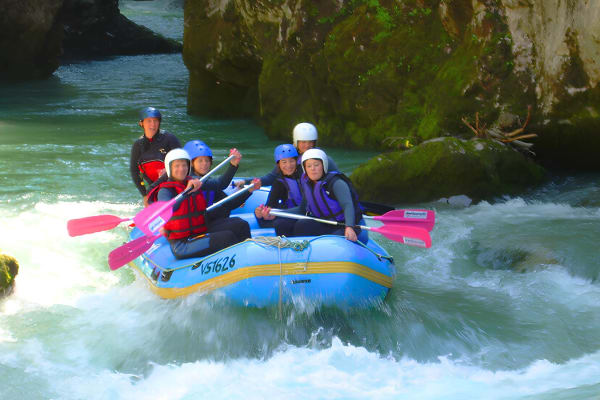
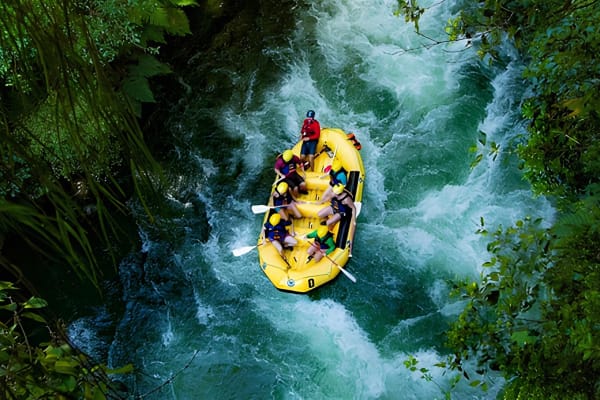
Class III-IV rapids drop straight from below the Eiger North Face, making white water rafting in Switzerland one of the most technically demanding river experiences in the Alps. The Swiss mountain snowmelt feeds rivers with ice-cold water, keeping temperatures between 8°C and 14°C even in midsummer. You're not paddling a lazy current, you're reading hydraulics on gradient rivers that surge through glacial gorges.
The Lütschine river, fed by the Grindelwald and Lauterbrunnen glaciers, delivers continuous class III-IV whitewater through the Bernese Oberland, with sections that open directly beneath the Eiger. The Simme river in the Simmental valley offers a different character: longer stretches of technical rapids suited to paddlers looking for sustained effort over a half-day descent. Further south, the Rhône river in the canton of Valais broadens the options with high-volume flows in July and August, where powerful hydraulic features replace the tight boulder gardens of the northern rivers.
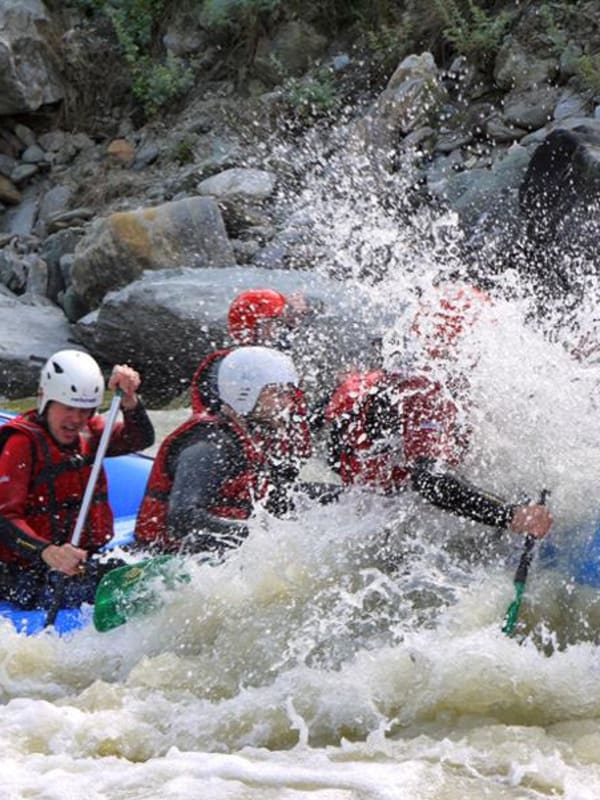
4 offers
From €121
3 offers
From €66
2 offers
From €89
2 offers
From €122
2 offers
From €191
1 offer
From €123
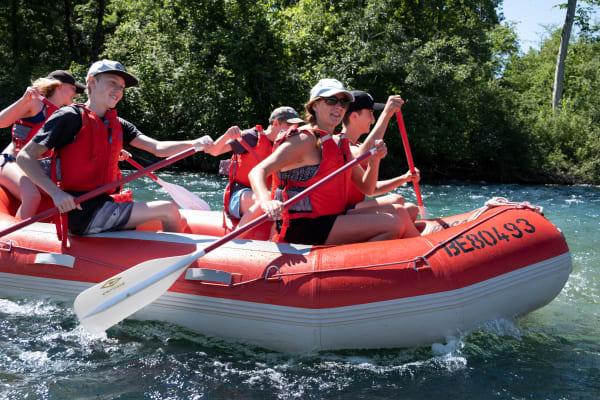
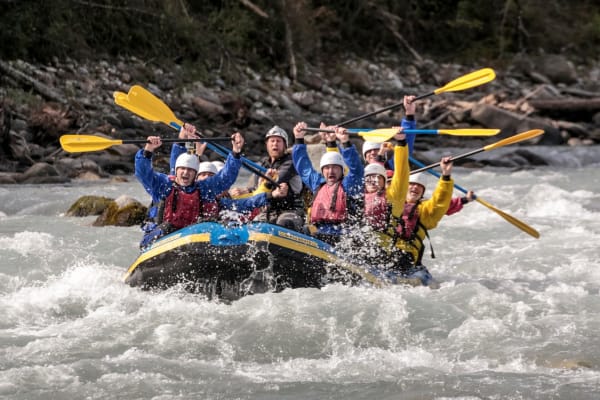
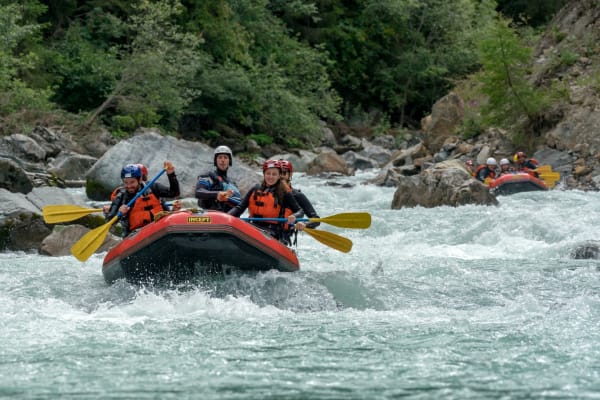
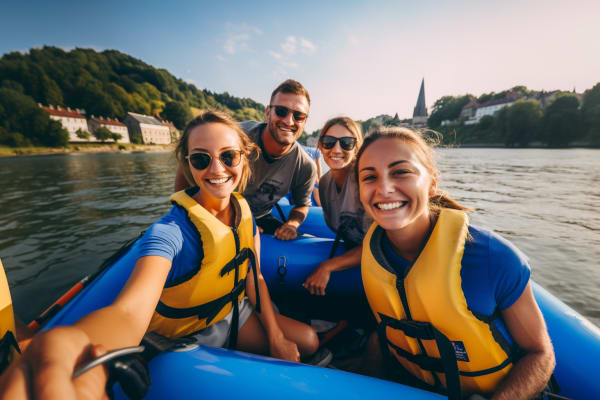
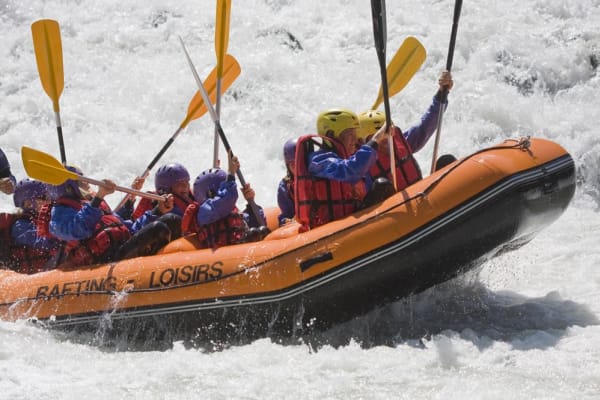
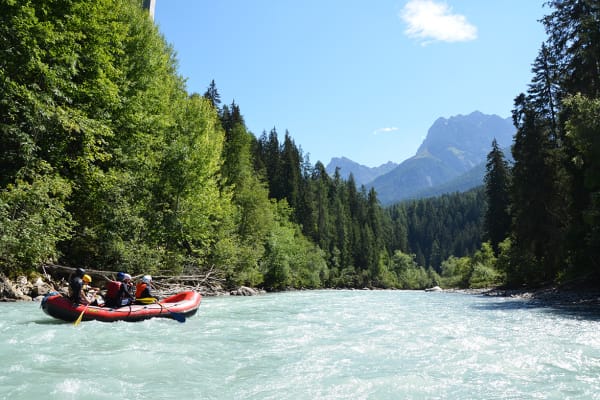
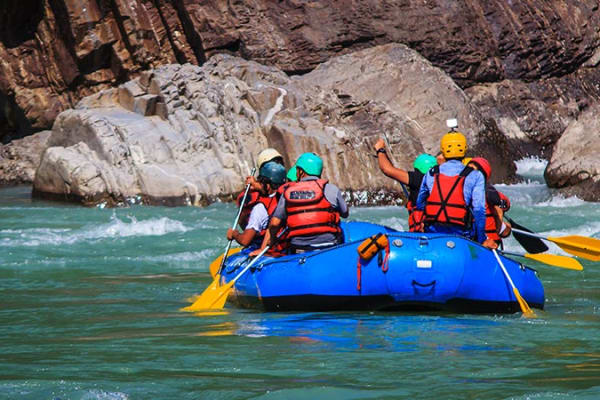
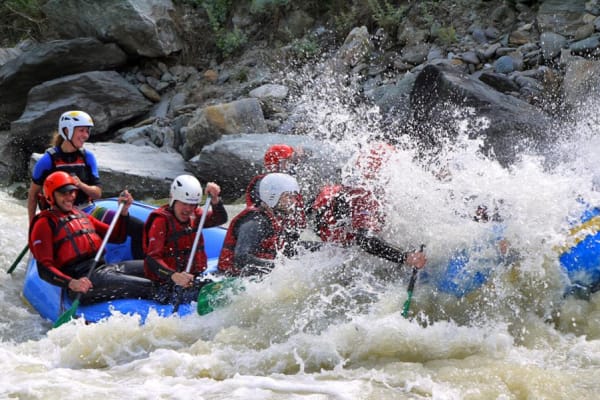
White water rafting in Switzerland starts at 66 € per person in Thun, which is currently the most affordable and highest-rated departure point. Interlaken trips range from 121 € to 154 € depending on river section and duration. Montreux options start at 152 €. Prices generally include wetsuit, helmet, paddle and guide.
The main season for white water rafting in Switzerland runs from May to September, with peak flows in June, July and August driven by Alpine snowmelt. July and August combine the highest water volumes with the warmest air temperatures, typically 22°C to 28°C in valley bases like Interlaken and Thun. September stays strong as glacier melt continues.
No prior experience is needed for introductory white water rafting in Switzerland. Class III sections on rivers like the Lütschine and the Simme are suitable for first-timers with a standard safety briefing. Guides certified by the Swiss Rafting Federation manage all technical decisions. A basic level of fitness and the ability to swim are the only personal requirements.
The Lütschine river in the Bernese Oberland is rated among the best for class III-IV whitewater, starting directly below the Eiger North Face. The Simme river in the Simmental valley suits paddlers seeking sustained technical descents. For high-volume flow, the Rhône in Valais peaks in July and August. Thun serves as a gateway to multiple Swiss river systems.
Operators providing white water rafting in Switzerland supply a full neoprene wetsuit, helmet, buoyancy aid and paddle as standard. Water temperatures on Swiss Alpine rivers stay between 8°C and 14°C, making the neoprene suit essential. Splash jackets are added on colder days. Personal items like secure footwear are usually required from participants.
Discover our complete guide for your first experience.
Updated September 2026