Canyoning in Banff
5 €93–€195 4.9 (100)
Water temperatures dropping as low as 4°C make canyoning in Canada one of the most technically demanding versions of the sport on the planet. The Canadian Rockies carve glacially fed gorges where rappels plunge past sheer quartzite walls, and the hydraulic force of snowmelt rivers turns every vasque into a genuine challenge. This is not recreational splashing. This is whitewater canyon descent at altitude.
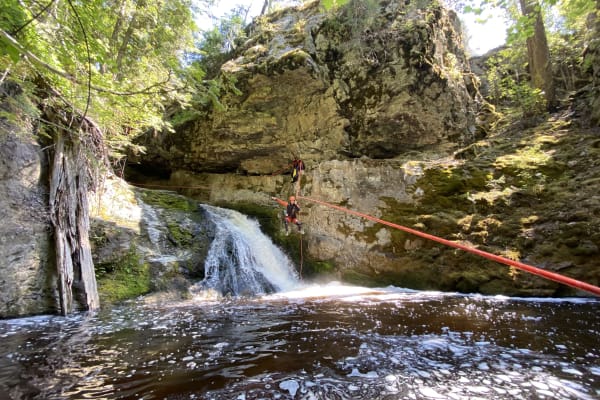
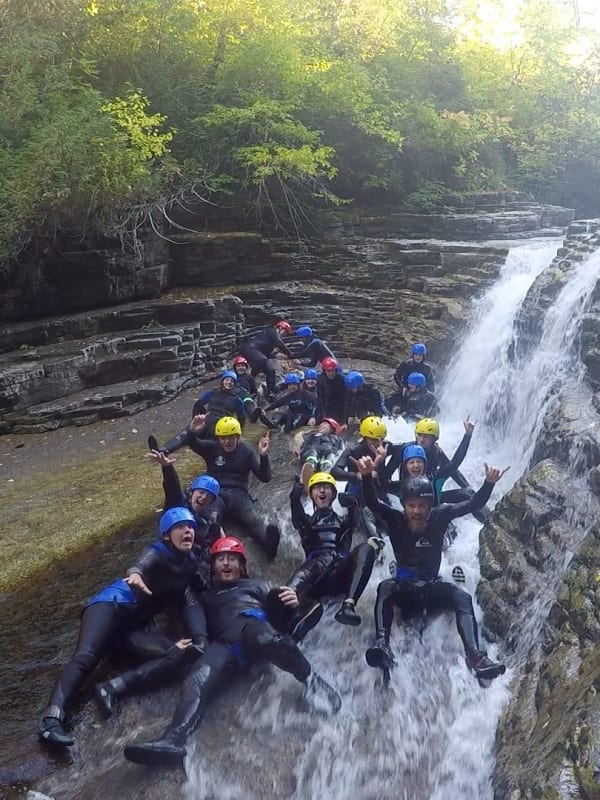
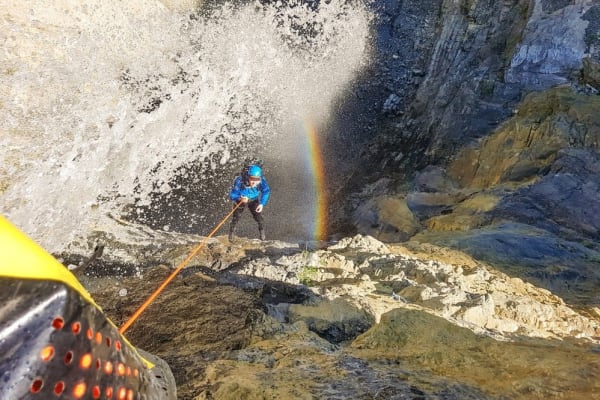
The Banff area delivers classic Rocky Mountain canyoning, with canyon slots carved by the Bow River system and multi-pitch rappels through limestone corridors still laced with ice well into June. Further east, Abraham Lake sits at the edge of the David Thompson Country, where the North Saskatchewan River feeds narrow gorges with sustained flow and a demanding gradient suited to intermediate and advanced canyon runners. On the other side of the country, the Chic-Chocs massif in the Gaspésie region of Québec offers a completely different terrain: ancient Appalachian bedrock, dense boreal forest, and waterfall cascades ranging from 8 to 25 metres that are accessible to beginners from late spring onward.
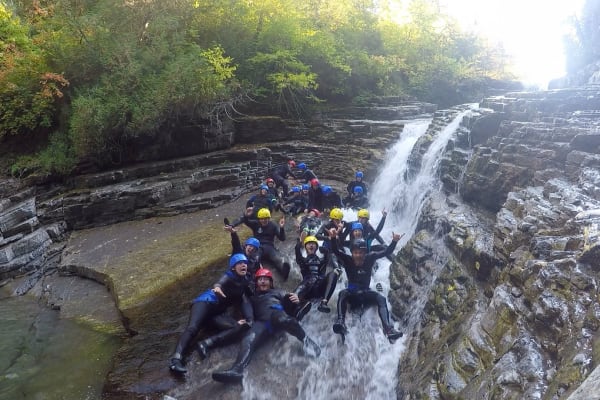
The core season for canyoning in Canada runs from May to September, with June through August offering the most stable conditions. April and May are viable in lower-altitude zones like Gaspésie, where snowmelt feeds waterfall cascades without creating dangerous flood levels. In the Rockies around Banff and Abraham Lake, July and August are safest, as glacial runoff peaks in June and water levels remain high.
Prices for canyoning in Canada start at 48 € in Gaspésie, making it the most accessible entry point nationally. In the Canadian Rockies, guided descents in Banff begin at 93 € and reach up to 195 € for full-day canyon expeditions. Abraham Lake outings range from 149 € to 490 € depending on route length and group size. All prices typically include wetsuit and safety equipment rental.
A moderate fitness level is sufficient for most canyon initiation experiences in Canada, especially in Gaspésie where routes average 2h to 3h. The Banff and Abraham Lake zones demand more: rappels on wet rock, cold water swimming and altitude above 1,400 metres require cardiovascular readiness. Operators provide a wetsuit and harness, but guides expect you to be comfortable in moving water before departure.
Yes, beginner-friendly canyon descents in Canada exist, primarily in Gaspésie, where waterfall rappels of 8 to 25 metres are guided by certified instructors and rated 5.0/5 across 4 reviews. These introductory routes focus on abseil technique, water confidence and basic canyon reading. The Rockies near Banff also offer initiation formats, though the glacial water temperatures and higher terrain commitment push them toward intermediate-level beginners.
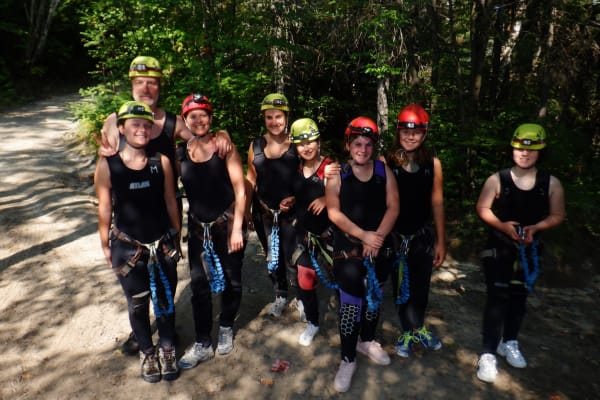
Most canyoning operators in Canada supply a combinaison néoprène (wetsuit), helmet and harness as standard. Given that water temperatures in the Rockies rarely exceed 14°C even in July, a 5mm wetsuit is typically included at Banff and Abraham Lake. Gaspésie operators provide equivalent gear for their Appalachian routes. Personal items like water shoes with ankle support are usually required and sometimes available for rent on-site.
Discover our complete guide for your first experience.
Updated September 2026